Sarah Yocheved Rigler
It all began with compost.
A few years ago, I ordered a large plastic composter from the American “Back to Nature” catalog so that I could turn my plentiful vegetable peelings into rich compost for the potted plants in my little courtyard garden. The composter, which looked like a large garbage bin with ventilation holes in the sides and a small door at the bottom, stood in an unobtrusive corner of the courtyard shared by our apartment and five others.
One upstairs neighbor, Mr. X, an elderly divorced man who did not socialize with any of the courtyard's residents, was unhappy. He claimed that the compost smelled and attracted flies. I sniffed: no smell. I looked: no flies. I called two other neighbors, forming a genuine sniffing committee, and together we sniffed and looked. No stink. No flies. Although I considered myself a model neighbor, I was not about to get rid of my precious compost heap because of the imaginary complaints of a neighbor who was impossible to please.
Two months ago, Chen, another neighbor's daughter-in-law who lives in an agricultural community, knocked on our door and said: “I don't want to seem pushy, but if you ever decide to get rid of your composter, we'd be happy to take it.” I thought about Mr. X, who had been unwell in recent months, and felt guilty. But not guilty enough to part with the composter.
Three days later, my husband, watching me work in the garden, decided to make his contribution by turning the compost. He removed the lid and began stirring the vegetable scraps and wilted leaves with a stick.
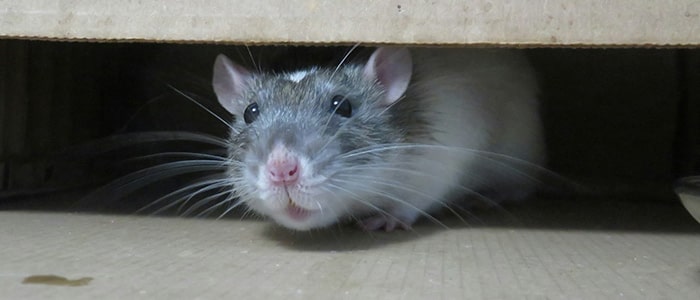
Suddenly a rat leaped out of the composter. It slipped under the courtyard gate into the maze of the Old City's alleyways, leaving me trembling with horror. My husband remarked on its smooth, shiny fur. So all my carrot peelings and parsnip tops had been feeding a rat!
I sat down in my kitchen, overcome by a wave of disgust, and asked myself: Given that Hashem runs the universe, what lesson should I draw from what had happened? What “rat” had taken up residence in my compost? Could it be my insensitivity to other people's feelings? Apparently Hashem had not been a member of my “sniffing committee” and had not agreed with its conclusions. I picked up the phone and called Chen. “You can take the composter,” I told her.
The following week, Chen's husband came and took the composter away. I felt punished. At the same time, I felt relieved that we had gotten rid of the rat.
A few days later, early in the morning, I went into the kitchen and discovered that a persimmon and an apple had been partly gnawed. Bits of persimmon peel lay scattered on the counter. Horrified, I called my husband. He called an exterminator.
The exterminator confirmed that it was a rat, not a mouse, and that it had most likely entered through the bottom of the kitchen window, where a corner of the wire we had installed to keep cats out was bent. He set three rat traps baited with chocolate, remarking that rats like chocolate. (I adore chocolate myself, but pretended not to hear that I had anything in common with those disgusting rodents.) He placed one trap under the refrigerator, another on the windowsill and a third near the living-room couch, where my husband had found mysterious droppings a few weeks earlier while opening the sofa bed for guests.
Although I always get up first and am the first to pass through the kitchen on my way to pray in the living room, that evening I took my siddur into the bedroom. I decided to say my morning prayers there until my husband got up and disposed of the dead rat. Call me sexist, but to me removing dead rats is obviously a man's job, and every woman I know, even ardent feminists, agrees.
The next morning, my half-asleep husband dutifully inspected all three traps and reported: No rat.
Yet another persimmon had been gnawed. And under the kitchen's dairy sink I found droppings. The rat had entered the cupboard beneath the sink from below, through the open space around the drainpipe, and had feasted in the garbage bin. I shuddered and called the exterminator again.
He moved two traps into the cupboard, right beside the drainpipe, and left the third under the refrigerator.
The following morning, while I tried to pray in the bedroom without thinking about a crushed rat under the kitchen sink, my husband checked again and reported: No rat.
Instead, two rags that normally rested on a horizontal section of the drainpipe had fallen onto the traps below. The rat had evidently climbed along the drainpipe to avoid the traps and had reached the garbage bin unharmed.
“Let's give it another night,” my husband suggested. “No rat can be that clever.”
The next morning, the kitchen floor was covered with three centimeters of water. Apparently thirsty, the rat had chewed a hole in the plastic tube leading to our water filter. The hole was only half a meter from the sprung trap under the refrigerator.
I called the exterminator again. He was puzzled. For twenty-seven years he had caught rats using precisely the same traps and chocolate bait. Not a single rat had ever escaped him.
This time he arrived with a pump sprayer filled with rat repellent. We knew that the rat lived under the cupboard, in the eight-centimeter space between the cupboard and the floor. First he placed a trap directly in front of the hole by the wall through which the rat entered that space. Then he began spraying beneath the sink, straight into the opening around the drainpipe. He sprayed so much repellent that little puddles of the liquid began seeping out from under the kitchen cupboard. We expected the rat to burst out of its hiding place straight into the waiting trap.
We waited. And waited. No rat.
Finally the exterminator said that another job was waiting and left. My husband went to his Gemara class. I greased the horizontal section of the drainpipe in case the rat tried to climb across it, hoping it would fall onto the two traps waiting below. Then I went to my computer, two rooms away from the kitchen, and tried to work. Two hours later I heard a trap spring.
“At last,” I thought. Staying by my computer, I waited for my husband to come home and remove the dead rat. When he entered the kitchen, he reported that the trap beside the hiding place had indeed sprung, but there was no sign of the rat. Somehow the rat had moved the trap, triggering it, and had escaped unharmed somewhere else in our home.
That evening, for the first time in a week, we left the kitchen window hospitably open, hoping the rat would tire of its war against three people and move to quieter territory.
For the next two days, the rat did not appear. Our evening ritual now included hiding the fruit bowl in the oven and the ripening tomatoes in the microwave. I decided to leave one persimmon on the kitchen floor to find out whether the rat was still living with us.
The next morning I found the gnawed persimmon on the floor at the far end of the meat counter. Horrified, I called the exterminator for a fourth visit, a record in his long pest-control career. We did not want to cause suffering to any of Hashem's creatures, even a rat, so I preferred traps that kill quickly. But now, in desperation, I asked him to bring poison.
He arrived armed with two glue traps and three kinds of poison. He found a large hole a few inches from the gnawed and battered persimmon. Evidently the rat had found a new home under the counter, with only one exit. The exterminator put two packets of poison, which takes effect over three days, into the hole. Then he placed two glue traps outside it so that the rat could not leave without being caught. He sprinkled fast-acting poison powder onto the chewed persimmon and placed it on the first glue trap, hoping that instead of a slow, agonizing death on the glue trap, the rat would eat the poisoned fruit and die quickly. In case it was hiding elsewhere, he put another poisoned persimmon on the other side of the glue trap. It was a complicated but supposedly foolproof system.
Yet that did not work either. The next morning my husband reported: No rat, and the persimmons had not been touched.
We stood looking at our foolproof, nonworking system when it suddenly struck me: This was no ordinary rat. It must be a gilgul [reincarnation] of a soul, refusing to die until it achieved its tikkun [spiritual rectification]. Jewish tradition is full of stories about gilgulim. Although a human soul returning in an animal's body is a rare punishment, it sometimes happens. How else could one explain a rat outsmarting three people?
“That's it,” I announced to my baffled husband. “We're going to Rabbi Scheinberger, the kabbalist who lives in our neighborhood, to ask what tikkun this rat needs so that it will finally die.”
My husband scoffed at my idea, but nevertheless reluctantly accompanied me to Rabbi Scheinberger. I told the rabbi the whole story and asked: “Could this rat be a gilgul, and what tikkun does it need?”
Rabbi Scheinberger waved his hand dismissively and replied: “The rat is not a gilgul. And the rat does not need a tikkun.” Then, looking straight at me, he declared: “You need a tikkun.”
“Me?” I asked in surprise. “What tikkun do I need?”
“What does the rat say in Perek Shirah?” Rabbi Scheinberger asked. Perek Shirah is an ancient poem attributed to King David in which every creature and natural phenomenon, from the heavens to the desert, from rivers to lightning, from snails to whales, praises the Almighty with a verse from Scripture.
That very morning, my friend Sarah Yehudit, who had followed my rat saga closely, had called with an astonishing discovery: In Perek Shirah, the rat proclaims, “Let every soul praise God. Hallelujah!” It is the final, and perhaps most exalted, verse in the Book of Psalms. And it is attributed to the rat!
I dutifully answered Rabbi Scheinberger: “Kol haneshamah tehallel Kah, Hallelu-Kah!”
“The tikkun,” he declared categorically, “is to stop complaining.”
I stared at him as though he had exposed a secret vice hidden even from me. Complaining? Me? I'm not a whiner.
Rabbi Scheinberger continued: “The Sages read this verse as ‘al kol neshimah uneshimah,’ meaning that with every breath one should praise Hashem.” This is based on the related Hebrew words for “soul” and “breath,” a relationship also found in Russian. “Each of us has received so many blessings that we should hold a feast every day in gratitude to Hashem. If we do not do that, then at least we should praise the Almighty with every breath.”
I went home with all kinds of thoughts racing through my mind. If I wanted to get rid of the rat, I had to stop complaining. But did I really complain so much?
That evening I removed both glue traps. The rat was not my enemy, and I did not want to subject it to such an agonizing death. I left one persimmon smeared with fast-acting poison. In the morning there was no sign of the rat, and the persimmon remained untouched.
As usual, I walked my nine-year-old son to his Talmud Torah in Geula. My son hates this forty-minute walk, which his physiotherapist says is good for him. As usual, he dug in his heels, resisted and walked at a snail's pace. When my husband returned from the synagogue after morning prayers, I went to greet him with an account of my frustrating morning. Somewhere between the bedroom and the front door, I realized: This is a complaint! Rabbi Scheinberger's words flashed through my mind. I quickly turned my frown into a broad smile and greeted my husband enthusiastically: “Good morning! Isn't this a wonderful morning to be alive? Kol haneshamah tehallel Kah, Hallelu-Kah!”
Five minutes later, I found the rat behind the refrigerator. It was dead.
The benefits of depression
I had no idea how much I complained. I thought I was simply reporting my dissatisfaction with the children, the difficulty of finding a parking space, or the new cordless telephone that had stopped working a week after its warranty expired. Yet my new, post-rat complaint radar revealed a constant habit of judging events negatively.
I asked myself: “Why? How we perceive a situation is our choice. Why, then, do we choose suffering?”
The answer is partly ego and partly culture. In stories and novels, a character's intelligence, resourcefulness or heroism is revealed only in relation to the difficulty of the problem facing that character.
My ego apparently learned this lesson early: If I want to be seen as intelligent, resourceful or heroic, I must emphasize how difficult my situation is. After all, how will my husband know what an experienced, sensitive mother I am if I do not tell him about the parenting challenges I faced today?
How will my friend know how patient and righteous I am if I do not tell her how a neighbor, without naming names, of course, insulted me unfairly?
Culture also suggests that people who are always smiling are somehow shallow. Don't they follow current events, the wars, famines and epidemics? What could they possibly be happy about?
In the 1960s, as a university student studying melancholy poets from Baudelaire to Ezra Pound, I somehow absorbed the idea that depressed people are very deep. In fact, on our campus at Brandeis University, the prevailing view was that if someone was not depressed, something was wrong with them.
Joy and Judaism
Judaism takes a diametrically opposite approach. Many people think that Judaism's emphasis on joy began in the eighteenth century with the rise of Hasidism. In fact, the Torah itself makes an astonishing statement. After foretelling the terrible calamities that would befall the Jewish people, it declares that all of this will happen “because you did not serve the Lord your God with joy and a glad heart…” [Deuteronomy 28:47].
Why does the Torah regard sadness, rather than sin, as the greatest harm to serving God?
Imagine that your spouse surprises you with a trip to a corner of paradise. Colorful parrots call from the palm trees. The crimson sun sets into a crystal-blue ocean. Your spouse presents you with a bouquet of roses, no, orchids! Then he sets before you a basket filled with ripe fruit: pineapples, mangoes, papayas and figs. On top of the fruit sits a large box of Belgian chocolates. (Remember, this is my fantasy!) Suppose you sit there gloomily complaining that you were not served steak. What does that say about your relationship?
Yet this is precisely the world Hashem created for us! Sunsets, orchids, daisies, mountains, butterflies, parrots, kittens, mangoes, strawberries and, yes, cocoa beans! Every complaint about what we do not have is a slap in the Divine face, a failure of outlook more serious than a failure of action. If we do not feel at every moment how much Hashem loves us and how much He gives us as an expression of that love, we reject the relationship with Him for which, according to Judaism, He created the world.
Learning to praise the Almighty
Praising the Almighty for every breath is a prescription not only against a rat invasion, but against sadness of every kind. The process has four stages:
- Look for the good in the thing or situation you encounter. Train yourself to notice details.
- Recognize that everything comes from Hashem, who gives life to all creation, every muscle, nerve impulse and atom, in every millisecond.
- Recognize that Hashem gave this thing or situation specifically to you because He loves you, each person individually.
- Let joy flow into your heart, and praise Hashem!
My life after the rat took on a different hue: Dark tones gave way to bright bursts of color. Now, when someone asks how I am, I reply, “Fantastic!” and mean it, without worrying that I will seem superficial or empty-headed. I am not ashamed to be happy.
In everyday life, it works like this:
- Instead of grumbling about having to fold the laundry, I appreciate each item. My husband's T-shirts? I praise the Almighty for cotton, that marvelous breathable fabric that grows out of the earth; for giving my husband T-shirts that I did not have to weave or sew; and for the fact that I have a husband at all. Fitted sheets? I praise Hashem for clean sheets that feel so fresh and inviting at bedtime, and for their fitted corners, which may be difficult to fold but let me make the bed quickly. And as I sit folding laundry and praising Hashem, I do not forget to thank Him for the washing machine, which spares me a washboard like the one my grandmother used.
- Instead of complaining that the bedroom telephone does not work, I praise Hashem because the kitchen telephone does. I thank Him for the thousands of conversations I had on that telephone before it was dropped for the last time. And I thank Hashem that telephones exist and I do not have to run to my friend's home every time I want to tell her something.
Rabbi Shlomo Wolbe, of blessed memory, recommended the following exercise: Several times a day, before eating a fruit, hold it in your hand and think about how many processes Hashem brought about so that this particular fruit would be yours. For example, hold a mandarin and consider how a tiny mandarin seed became a sapling. For several years Hashem provided abundant sunlight and water so that the sapling would grow into a tree. Then, last spring, hundreds of blossoms opened on that tree, giving off an intoxicating fragrance. Gradually the blossoms fell away and a small green fruit appeared. For eight months the fruit grew larger and larger. Then it turned bright orange. Someone picked it, packed it and sent it to the shop where you bought it. Hashem directed all these processes to give you this mandarin. Now say the blessing: “Blessed are You, Hashem our God, King of the universe, who creates the fruit of the tree.” Then close your eyes and take a bite. Notice its sweetness, texture and juiciness; think about the vitamin C arriving precisely when it is so needed in winter, and about the individual wrapping around each tiny packet of juice. Then savor Hashem's love for you, expressed through this gift.
You will never fall into depression again.
Original Russian translation: BIN