Today I want to talk about cats. Yes, cats.
Once, I was about to drive out of a parking lot when I suddenly saw a cat—a sweet little feral kitty. She was sitting in the middle of the driveway without a care in the world. I was even afraid to honk, in case she ju-u-umped in fright and I ended up being fined by some organization for the protection of feral cats.
Of course, protecting animals is very important, and I myself never mistreat animals and love everything the Almighty has created in His world. But what can we learn from a cat? After all, a cat has a secret of its own. And it isn't how to block the exit from a parking lot.
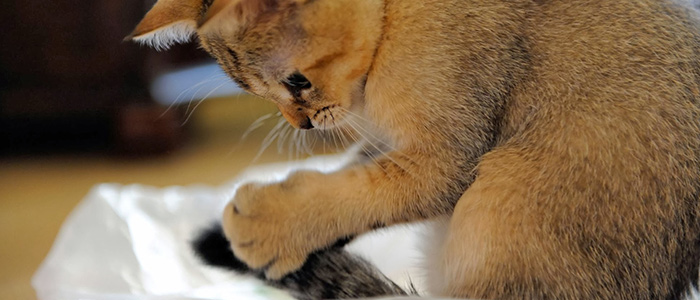
Sometimes cats display an interesting behavior: they seem to be battling themselves, spinning around in an attempt to catch their own tails. It looks as though they are just about to catch them, but their tails slip away again—and so it goes, over and over.
Some people do exactly the same thing. They get stuck at a certain point and start going around in circles. That isn't very sensible; after all, a wise person always strives to move forward. We don't stay in first grade for the rest of our lives; we develop.
Once, a woman at one of my lectures came up to me and said: “You have no idea how impressed I am! I didn't know that this mitzvah prevents illness, while that one makes it possible to be joyful all the time. I realize that I need to strengthen my observance. I've taken it upon myself to say 'Asher Yatzar' (the blessing recited after using the bathroom) in a full voice, with the proper frame of mind—in gratitude that my body, thank G-d, is functioning properly.” I met the same woman 20 years later, and she was still at the very same stage.
You see, I have great respect for this woman—she deserves a lot of credit—but people don't live on baby food for their entire lives. People move forward and improve themselves. We mustn't get stuck at one stage, with one blessing.
Parashat Shoftim offers advice on how to turn something that has given you a spiritual lift into a driving force, something that makes you move forward. It also tells us how to prolong that sense of inspiration, how to keep the “fire in the hearth” burning. And how to seize the moment—as the saying goes, “if the iron is hot, start ironing,” meaning, take advantage of the fact that the iron is hot right now; don't let it cool.
So, Parashat Shoftim says: “Appoint judges and officers for yourself at all your gates” (Deuteronomy 16:18). The Sefat Emet says that this refers to the gates of the heart; in other words, the judge and officers must stand at the gates of the heart when they open as a result of spiritual inspiration. Who, in this case, are the “judge and officer”? This figurative expression means “turning that sense of inspiration into action.” Sometimes a person starts telling everyone about the work he needs to do in a particular area—on himself, on raising his children, on peace in the home—but nothing goes beyond talk. That is why it is important to appoint judges and officers who will keep the “steam from escaping” and turn it into a driving force.
I want to end with a story about… an elephant. Once, an elephant met a centipede. The elephant was so astonished that he asked the centipede:
- How do you manage with so many legs? I don't understand. I can barely manage my own four legs, and you've got a whole 40!
And the elephant left. About a month later, he was passing that spot again and saw the centipede once more. The elephant asked:
- What, you haven't left this spot?
- That's right. Ever since you asked me, I've been thinking all the time about which leg I should step with next so I don't bump into any of the others, get tangled up, or fall down. I keep thinking and get more and more tangled up. And I can't budge at all!
Let's not be centipedes. Let's turn a lesson we've heard that has made a deep impression on us into action. Let a lecture that has given us food for thought also give us a reason to act. Then we will be able to see ourselves in motion, to see that we are moving forward and improving, rather than chasing our own tails.