Rebbetzin Leah Gans
“And if we look at the first eight chapters and at these 32 chapters, we will see that the trait of chesed extends to every existing area of doing good, and that everyone can do chesed in their own field, often even through simple things, almost as in the case of ‘This one benefits, and the other suffers no loss.’ And people neglect this.”
“And I would say that the midrash cited in the book ‘Lev David’ (chapter 22) is relevant to our situation. The prophet Elijah was walking with Rabbi Yehoshua ben Levi. Elijah showed him a street where many people had gathered, crowding around a shop to buy something. Looking over the crowd, they saw that what was being sold there was… rotten dog meat! And each kilogram cost a dinar (of gold)! Everyone was pushing to get ahead of the others in line. But on another street Elijah showed him, there was a shop selling fresh, fatty veal, and cheaply, too—and no one was there! Not a single customer. Rabbi Yehoshua ben Levi was very surprised, and Elijah asked: ‘Why are you surprised? The crush at the shop selling rotten dog meat closely resembles the enormous crowds of people who pursue sins with all their might, expending great effort and money. Yet sin is rotten meat!
But Torah and mitzvot are like wholesome, fresh meat sold cheaply, with no buyers.’
And this is what I mean: sometimes a person readily and gladly spends money on empty pursuits and foolishness that the evil inclination puts before him—for example, for the sake of imagined honor or a sense of superiority.
Sometimes this runs to hundreds and thousands of rubles. And sometimes he attains it through great effort and suffering that bring no benefit in either the World to Come or this world. In truth, it is no better than rotten dog meat. But when it comes to chesed, when the good inclination urges him, calls out and pleads: ‘Come to me and buy my merchandise, kosher merchandise that even the Creator Himself acquires (as it is written in the prophet Micah (7:18): “For He desires chesed”). It is a person's security and good fortune in this world and in the World to Come. You can buy it with little money and without any great effort.’ And there is no buyer for this wonderful merchandise, because of our great sins.”
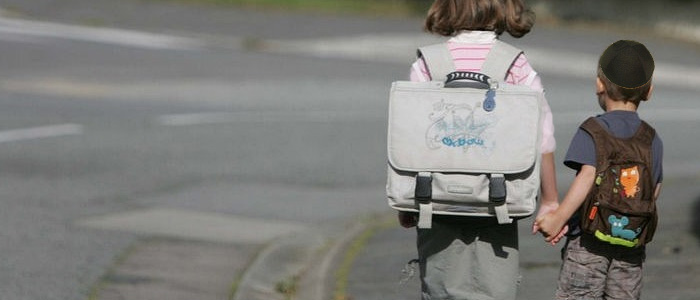
Sometimes I see children standing and waiting on the street outside our home. They have been taught not to cross the street on their own. They stand there and stand there, waiting for someone to help them cross. It takes only a few seconds, yet people feel they have neither the time nor the energy for this chesed. Everyone hurries past, and no one asks whether they might need to cross the road… Sometimes they stand there for 10 minutes.
My eldest son suffered lifelong emotional trauma when, before his eyes, a car ran over his classmate at a crosswalk as the boy was crossing the road on his way home.
My son took it very hard, and I consulted the cheder's psychologist about how to help him cope and draw out what he was feeling. We managed to talk, and I explained what he could do to help elevate that boy's soul. They were both 8-9 years old at the time…
“The reason is that the yetzer hara does not let a person reflect on the greatness of the trait of chesed and its tremendous benefit.
Therefore, one can advise a person to reflect on what our Sages wrote about the benefits of this wonderful and holy trait—chesed. This will affirm for him that the Almighty desires us to accustom ourselves to treating those close to us with kindness and compassion, as it is written (Deuteronomy, 11:22): ‘To walk in all His ways and cleave to Him.’ Sifrei explains that these are the ways of G-d, as it is written (Exodus, 34:6): ‘The L-rd is the L-rd, mighty, merciful and gracious, slow to anger and abundant in kindness and truth.’ In this way, he will develop a love for the trait of chesed. And in this merit, the Almighty will also treat him according to the trait of chesed in this world and in the World to Come.”
Chesed can be done through the power of words, by supporting people, advising them, and praying for them.
First and foremost, as wives and mothers, we can put this into practice in our own homes. The creative power the Almighty has given to goodness will help us build our homes through mitzvot and good deeds performed through speech.
Prepared by Mrs. Zissi Skarzhinskaya