Rabbi Baruch Fruchter
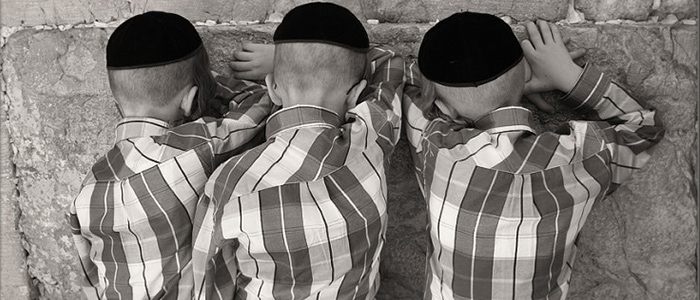
Why do we pray?
Let us honestly admit that, for us, the main part of prayer is asking the Almighty to give us everything we need and thanking Him for all the blessings He has already given us.
It makes sense to ask the One Who possesses all the riches of the world, and it is important to reveal this “secret” to your children. We can and should ask the Almighty for everything – from a new toy to success in our studies.
Teach your child to pray! Prayer helps us not only to receive material blessings but also to find peace of mind.
For example, when a child feels envious of a more successful classmate, it would be foolish to say, “Don't be envious.” This will not only fail to help the child cope with negative feelings, but may also undermine the child's trust in their parents.
Instead, point out that no one is perfect, and even the luckiest (most successful, most beautiful, etc.) person has difficulties, even if no one knows about them – for example, other people's envy. Suggest that your child pray for the person they envy!
Knowing and understanding the power of prayer, the child will realize how much they are giving to someone else, and this sense of giving of themselves will raise your son or daughter to an entirely different level.
As a hypothetical example, this can be compared to a millionaire knocking at the door of a person of modest means toward evening and asking to borrow 10 shekels – all his money is on his bank card, the banks are closed, and he has no way to buy milk.
Of course, the millionaire has millions in his bank account, and 10 shekels is nothing compared with his wealth; yet those very 10 shekels will practically save him at that moment and bring the poor man and the rich man much closer together. Meanwhile, the poor man will feel that he is in the position of giving, which will greatly boost his self-esteem.
What we wrote earlier about an emotional connection with a child also applies to prayer.
First, any changes in this area clearly reveal the feelings your child is experiencing at this stage of life.
There are many signs of this: the child has stopped getting up in time for prayers, stays late at the synagogue because they do not want to come home, cannot concentrate on prayer, or, conversely, has begun to show a fervor never seen before. Any such unusual behavior is a reliable indication that something is wrong in your child's life, but only if these changes occur without a reason apparent to you.
In practical terms, this means that you may need to give your child more attention and think of activities to do together – and what could be better than praying together? This is especially helpful if you have managed to find out the reason for the sudden change in behavior: instead of tossing out a curt “Pray, and everything will work out,” pray together!
to be continuedPrepared by A. Shvalb