Rebbetzin Chava Kuperman
Chapter 11 begins with a military conflict brewing in a place called Jabesh Gilead.
King Nahash the Ammonite (a reminder: nahash means snake), together with his army, sets up camp opposite the Jews on the eastern side of the Jordan River. (Here we bordered three nations: Ammon to the north, Moab in the center, and Edom to the south).
Meanwhile, the newly chosen King Saul is somewhere far away, at home. For now, he does not really see himself as king at all: someone brought him a gift, and he accepted it; someone brought nothing, and he said nothing; someone insulted and humiliated him—and that, too, had no consequences…
But here in Jabesh Gilead, the Jews are terrified. There are only a handful of them, and they understand that the forces are unequal: if Nahash attacks, they will not be able to withstand the mighty enemy army, armed to the teeth. They see only one way out—they offer Nahash a treaty, saying they are prepared to serve him, to be slaves.
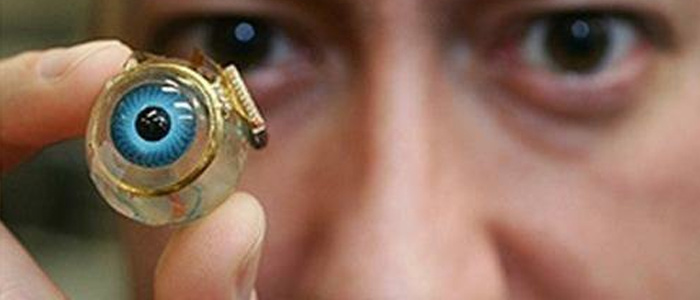
“And Nahash the Ammonite said to them: ‘I will make a treaty with you, but on condition that I gouge out the right eye of each of you, and this will be a disgrace to all Israel’” (I Samuel, 11:2).
Then the elders of Jabesh said: “In that case, give us seven days, and we will send messengers throughout the territory of Israel. If no one helps us (in the war against you), then we will accept your terms.”
How astonishing and puzzling! If Nahash intended to wage war against the Jews, why on earth did he agree to wait seven days? What sort of political games are these?
Let us try to understand. As we know, the Jews had just changed their status. By choosing a king, they had changed the situation throughout the region. A state ruled by a king has greater prestige; a state has grandeur, and it unites people. Once there is a state, its subjects are no longer tribes but a nation. Something that happens in a remote region of the state affects the interests of the entire state, and the king must defend that region—such are the laws of national prestige. If a king cannot protect his subjects, then he is no king.
Nahash wants to demonstrate to everyone that the Jewish state is utter nonsense, that the king of Israel is a zero, a nobody, and that the Jews can be humiliated however one pleases.
To do this, he needs to provoke a conflict. What matters to him is less the war than the demonstration. Do they want to go and ask for help? Let them go, by all means! Their king will do nothing to help them! And this will only show more clearly what the newly established Jewish state really amounts to.
The tragedy of the situation in which the Jews of Jabesh Gilead now find themselves is compounded by another circumstance. We read about it in the Book of Judges (in chapters 19, 20, and 21), which recounts a horrific collective crime committed by men of the tribe of Benjamin. (We will not go into the details now). Retribution for that monstrous sin was the almost complete destruction of the tribe. 400 girls and 600 young men survived; they formed 400 married couples, while the remaining two hundred young men without partners were given wives from other tribes.
The present inhabitants of Jabesh Gilead are the children and grandchildren of those very four hundred Benjaminites who married. What Nahash plans to do to them is all the more dramatic because Saul himself comes from the tribe of Benjamin. And if he does not defend them, who will?.. Clearly, there is no one else to defend them!
Now let us try to understand what the right eye means to the inhabitants of Jabesh Gilead. Why did Nahash need to deprive them specifically of their right eyes?
The first and simplest explanation is that the eyes are the most noticeable feature of the face, and for everyone living in Jabesh Gilead to be missing the same eye would be a terrible humiliation.
However, this still does not answer the question of why it had to be the right eye.
The second explanation goes deeper: the Philistines had forbidden the Jews to forge iron, as will be discussed a little later (I Samuel, chapter 13, 19-22). As a result, the Jews have no swords at all, with the exception of two people—Saul and his eldest son Jonathan, who is to become heir to the royal throne. If they have to wage war against anyone (Nahash or any other enemy), or if they need to defend themselves against anyone at all, the Jews' weapons are bows and arrows and slings. All the men of the tribe of Benjamin were excellent marksmen. It is said that “...among all these people were seven hundred chosen men who were left-handed; every one of them could sling a stone at a hair and not miss” (Judges, chapter 20, verse 16). For such people, the most important organ is the right eye; the moment it is taken away, they become helpless.
The third view is on an even higher level.
The Jewish people are viewed as a single organism, corresponding to the structure of a human being. Thus, the king is the heart, and the Sanhedrin is the eyes. The eyes help us, showing us where to go so that we do not stray from the right path, and where not to go so that we do not stumble and fall… This is discussed in the Torah (Leviticus, 4:13), in the passage concerning the Assembly's responsibility for the mistakes of the entire community.
What is Nahash trying to achieve by seeking to gouge out the right eye of everyone living in Jabesh Gilead? To destroy the Sanhedrin! Moreover, the Hebrew word for eye is ayin, and the letter ayin has a gematria value of 70. The Sanhedrin consists of 70 judges.
A fourth explanation, on an even higher level: Nahash wants to destroy the Torah.
He demands that the Jews of Jabesh Gilead give him their Torah scrolls, because he needs to erase the passage stating that an Ammonite may not enter the congregation of the L-rd until the 10th generation (Deuteronomy 23, 4). If Nahash takes away the Torah scrolls, it is clear that this will affect the faith of the entire nation.
The messengers come to Saul, who still does not see himself in the role of king and is not there. He is in the field, plowing it with oxen.
The king is absent, and the messengers tell the people why they have come and what Nahash said to them. Everyone who hears them weeps. (Tears are usually the result of helplessness. They show that one is unable to defend oneself).
But then Saul returns home, everything is told to him again, and the spirit of the Almighty descends upon him (that is, he feels great strength within himself). Saul feels tremendous anger; this is the reaction of a strong person, and it gives him a great deal of additional energy.
He takes the very pair of oxen with which he had been plowing, cuts them into pieces, and sends them throughout the territory of Israel with the words: “Whoever does not follow Saul and Samuel, so shall it be done to his oxen” (I Samuel, chapter 11, 7).
“And the fear of the L-rd fell upon the people, and they all came out as one man” (I Samuel, chapter 11, ibid.).