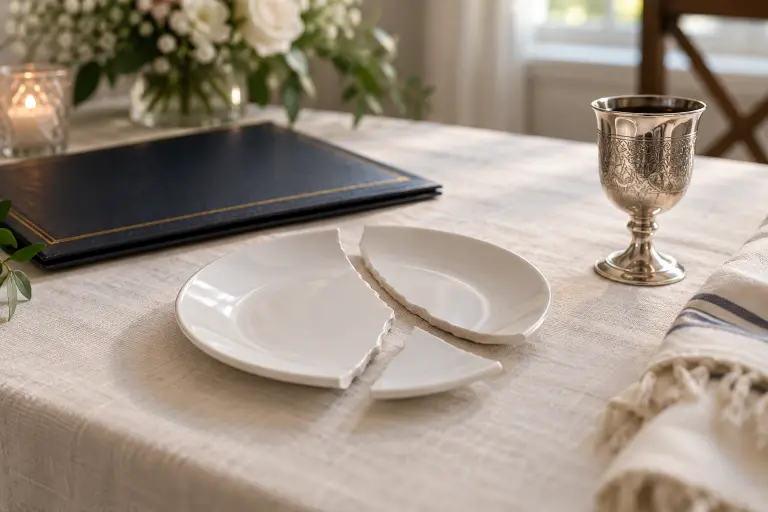
An engagement celebration, called a vort or tenaim, is a small gathering of family and close friends held immediately after the signing and public reading of the tenaim (an agreement of intent between the parents that sets out each party’s obligations and the wedding date).
The Custom of Breaking a Plate at the Vort
After the agreement is read aloud, the groom’s mother and the bride’s mother hold the edges of a plate together and break it against the floor or a special stone. It is customary to break an earthenware or ceramic plate, sometimes with the additional stipulation that it already be slightly chipped. When the plate breaks, the room fills with joyful cries of “Mazal Tov!”—a wish for happiness for the bride and groom.The meaning of this custom lies in the fragility of clay. Broken earthenware cannot be fully glued back together and restored. This symbolizes the absolute seriousness and irreversibility of the decision: breaking off an engagement after the tenaim have been concluded is an extremely grave transgression under Jewish law. Just as the plate will never be whole again, the word given by the families cannot be taken back.
Pieces of the broken plate are often given to the bride’s unmarried female friends or relatives as a segulah for marrying soon.
Note: Nevertheless, Jewish law does permit an engagement to be broken off in certain circumstances. This applies especially when one party learns critically important negative information affecting the family’s future only after the engagement. If necessary, consult your rabbi.