Rebbetzin Chava Kuperman
“She rises while it is still dark, gives food to her household, and assigns tasks to her maidservants…
“Rises while it is still dark” means while it is still night outside. Everything connected with night in Eshet Chayil is necessarily connected with Pharaoh’s daughter Batya. According to one view, Batya regularly walked along the banks of the Nile and had her own reason for doing so. She learned that her father had ordered Hebrew babies to be killed by drowning them in the river—he was afraid of these babies, because it had been foretold to him that one of them would become the savior of the Jews. And Batya decided to save the savior—she had to find this child. And when she found him, she was happy.
A woman who rises while it is still dark is not lazy (the straightforward explanation of the verse). The Chazon Ish says that women are prone to three bad traits that seriously hinder them in marriage: laziness, bad moods, and nervousness.
The problem is that if a woman is not lazy and is energetic, she is automatically more nervous. Being active and not nervous at the same time is incredibly difficult.
Another lesson we learn from this verse: it is important for a woman not to take everything upon herself, but to know how to share responsibilities—that is, to “assign tasks to her maidservants.”
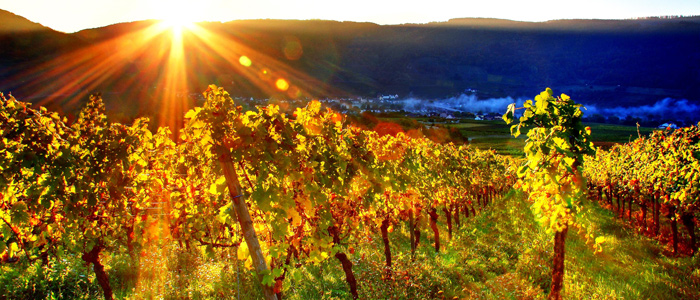
“She considers buying a field—and buys it; with what her own hands have earned, she acquires a plot and plants a vineyard on it”...
According to one view, this refers to Yocheved, who, while delivering babies in Egypt, risked her own life to save Jewish children from extermination. She literally “planted the vineyard of the Jewish people with her own hands.” (In many places, both in Psalms and in the Prophets, the Jewish people are compared to a vineyard).
According to another view, this verse speaks of Rivka. The Hebrew verb for “considers” is zamemah. But this word also has a second meaning— “restrains.” In this case, the field symbolizes Esav, who is called a man of the field. Rivka did indeed restrain Esav and thereby saved Yaakov, from whom the Jewish people descended. In other words, we can say that it was Rivka who planted the vineyard.
A field needs to be sown annually—afresh every year; a vineyard is planted once and bears fruit for many years. A vineyard represents the classics, while a field represents the latest fashion. But fashions become outdated and pass, while the classics endure. Esav, who symbolizes Western culture (“fresh” views and ideas), represents the latest fashion, while Judaism represents the classics.
We will stop here for now and, G-d willing, continue our discussion of Eshet Chayil in the next article.