Basya Tsybukmakher
Preparation
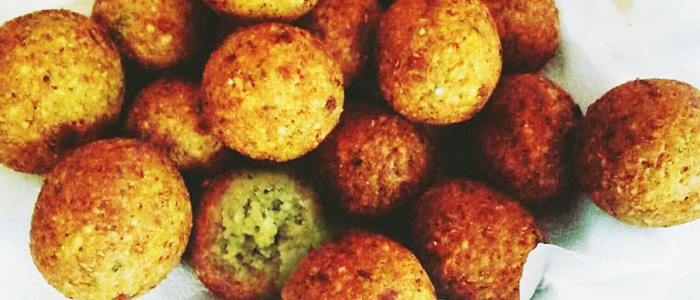
A lyrical preface: how did it all begin? Strange as it may seem, despite all our love for Israel, I had never eaten falafel in my life. I had eaten hummus, though, and knew it was "not my thing"... My husband decided to remedy the omission where falafel was concerned, and here it is, in all its glory, right in our kitchen—the aroma is indescribable, and calling it delicious hardly does it justice!
Soak the chickpeas for at least 5-7 hours. After soaking, rinse them thoroughly and boil for 20 minutes (including the time it takes to come to a boil). They should not be fully cooked when you turn off the heat. Rinse again.
Chop the herbs; they do not need to be finely chopped. Divide the chickpeas into two batches, depending on the capacity of your blender bowl. Put the chickpeas, all the spices, and the herbs—or some of the herbs if they do not all fit—into the bowl. Blend all the ingredients thoroughly into a uniform mixture, but not a "purée": you want very, very small lumps.
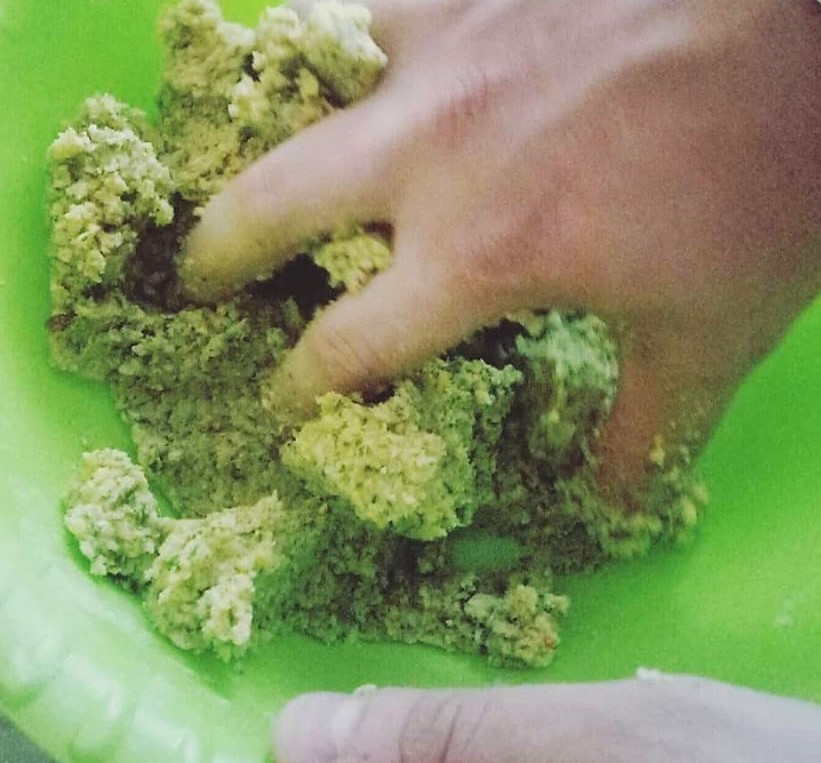
Then transfer everything to a bowl and mix thoroughly, adding flour. Judge from the mixture how much flour you need (because chickpeas from different producers have different starch contents, and therefore different binding properties). As a test, roll a ball and see how well it holds its shape (we accidentally dropped one, and it did not even fall apart; try dropping one onto a cutting board or table from 10-15 cm). Judge the ball’s firmness from the result. Make the balls about 2-2.5 cm in diameter.
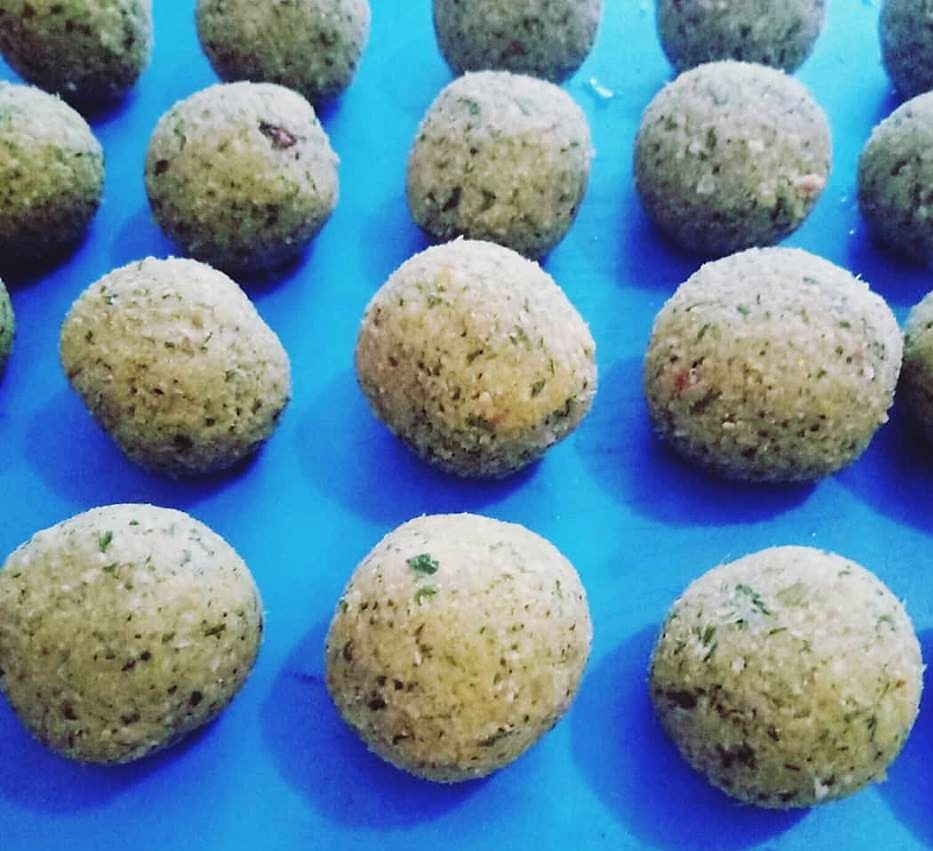
We strongly recommend rolling all the balls at once if you plan to eat them immediately after cooking. Only once they are ready should you heat the oil in a pot with a THICK bottom (let the oil get very hot, so that it bubbles vigorously when you lower a ball into it). Try one ball first to gauge how long your particular balls take to cook. After each batch (3-4 balls per batch), give the oil 1-2 minutes to return to its previous temperature, because it drops a little after each batch, which can prolong the cooking process.
☝: the amount of oil varies depending on the diameter of your pot; if possible, let the oil cover 3/4 of the ball...
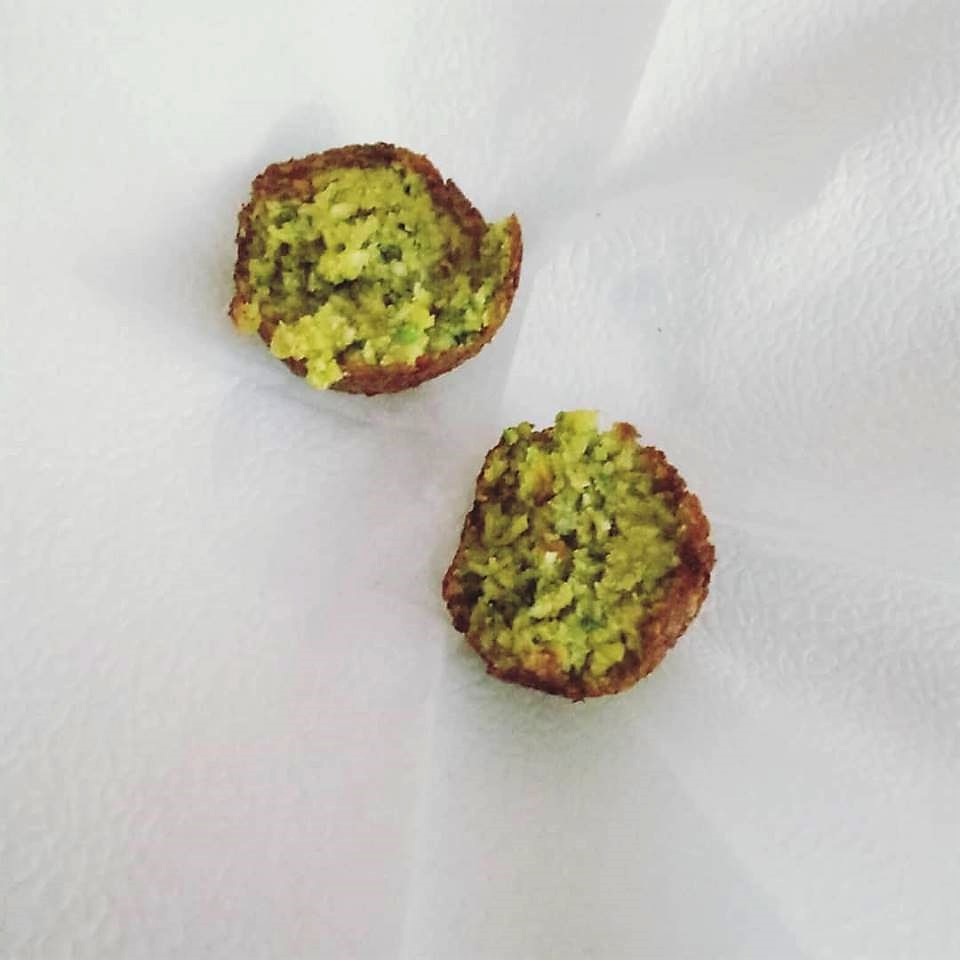
Once cooked, place the balls on a napkin (or on a plate lined with paper napkins, so that the paper absorbs the excess oil).
Enjoy, and protect your hands when working with hot oil :)
Kitchen measures
| Ingredient | Cup | Tbsp | Tsp |
|---|---|---|---|
| Wheat flour | 140 g | 10 g | 3 g |
| Sugar | 200 g | 12 g | 4 g |
| Salt | 290 g | 18 g | 6 g |
| Butter | 230 g | 15 g | — |
| Powdered sugar | 120 g | 10 g | 3 g |
| Honey | 320 g | 22 g | — |
| Cornstarch | 140 g | 10 g | — |
| Cocoa | 140 g | — | — |
| Oil | 200 g | — | — |