Rebbetzin Esther Offengenden
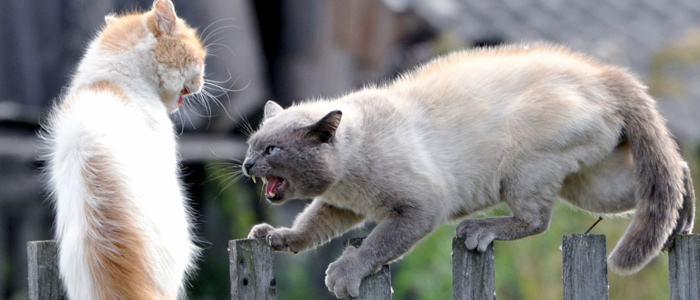
And so, at last, we roll up our sleeves and begin learning how to argue, fight, and quarrel.
To criticize, to say everything that has been boiling up inside. To do something about our emotions and the people who—ugh!!—provoke them.
Why learn? One way or another, most of us manage that well enough!..
|
Let’s begin with a little test. Write down how you usually quarrel. In order, like a plan. Five points will be enough. Now, following the same approach, write down how you make up. |
Those who were able to complete this task without much difficulty have won! They have gained a great deal in their family lives.
Unfortunately, most people find this test difficult to complete. For many people, techniques for arguing are lacking, and their reconciliation skills are less than ideal. This leads to all sorts of sad consequences.
Let’s take a version of a familiar parable as an example.
Once upon a time, there lived a husband and wife. They lived together for a long time, though not exactly happily. The husband often hurt his wife, shouted, and made scenes. The wife silently put up with it, over and over, until she felt that so much pain and resentment had built up that she could not cope unless she let it out. What could she do? She was ashamed to tell anyone, and there was no one to tell anyway. Shout back - she didn’t know how. She thought and thought, and finally came up with an idea. A Big Strong Tree grew in their courtyard. And so, after every quarrel, she began taking a hammer and driving nails into the tree!
One day, her husband came home outraged:
- There are little hooligans living in our courtyard! You should see what they’ve done to the Big Tree! It’s covered in nails!!!
- It wasn’t the children. It was me, - his wife replied.
- You?! But why?
Then she told him everything. He was stunned, and they began trying to improve their family life. Every time they managed to put something right, to climb another step, the husband would go and ceremoniously pull a nail out of the Tree.
The day came when the Husband joyfully led the Wife to the tree and showed her that not a single nail remained!
- The nails are gone. The holes remain, - sighed the Wife.
Suppose we are birds perched on the branches of this Big Tree. Let’s take a closer look:
- Undoubtedly, the holes will remain. Even when they heal, marks will be left. But! Is this really the time to remind the Husband of that—when he has put in so much effort, tried so hard! I’m afraid this hole will take longer to heal than the others.
- By the way, why are there SO many holes? What was her husband ranting about with such abandon, all on his own? It seems she didn’t just avoid quarreling with him; she didn’t communicate with him much at all.
- And judging by her last remark, making up with her is difficult too.
- I feel terribly sorry for the Tree. Or rather, for whoever has the job of being the Tree in their family. Unfortunately, it is usually the children...
All in all, the birds up above can see very clearly that quarrels are a multifaceted matter, with a wide range of consequences. On the other hand, trying to avoid all conflict (as the wife did) does not lead to anything good either.
To be continued