Rabbi A. A. Rabinovich
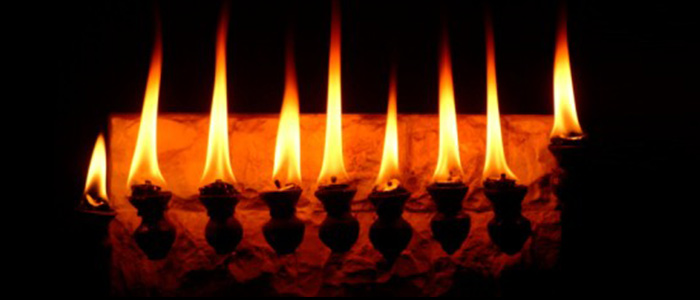
Under Greek rule, the light of Torah did not die out among our people thanks to the incredible self-sacrifice of a single family, the Hasmoneans. They managed to save the entire Jewish people, spiritually and physically!
It is all the more astonishing—and tragic—to realize that of the entire enormous Hasmonean family, there was literally no one whatsoever left—not a single descendant. We find a reference to this in tractate Bava Batra (3b): "Anyone who claims to be descended from the Hasmonean family is (in fact) an eved—a slave." Why did this happen?
Rabbi Moshe Soloveitchik, זצ''ל, said the following in one of his sermons: At first, they strayed only slightly from the path prescribed by the Torah by declaring themselves kings, even though they did not belong to the tribe of Judah. Then disagreements and struggles arose within the family; each sought to push the others aside, and in the end this led to complete decline and disappearance. (see Ramban's commentary on Genesis 49:10)
It is well known that the cause of the destruction of the Second Temple was sinat chinam—baseless hatred.
We encounter a similar situation in the story of the relationship between Joseph and his brothers, which always coincides with Hanukkah.
The portion Vayeshev begins with the words "וַיֵּשֶׁב יַעֲקֹב בְּאֶרֶץ מְגוּרֵי אָבִיו"—"And Jacob settled in the land where his father had sojourned". Rashi comments on this verse, citing the Midrash, as follows: "Jacob wanted to live in peace; immediately, the tragedy involving Joseph (caused by strife) befell him". It seems that the Sages were seeking an explanation for the suffering Jacob had to endure because of the sale of his beloved son Joseph. They give as the reason that Jacob wanted too much peace in this world.
However, it is hard to understand why the Sages seek explanations only now. Why do they not ask this question earlier? After all, even before this, our patriarch Jacob had endured plenty of suffering: his brother Esau wanted to kill him; for twenty years he endured Laban's deception and fraud; and after all that, his daughter Dinah was abducted... And in none of these cases do we find an explanation of why they befell Jacob.
Rabbi Moshe זצ''ל answered as follows: In fact, the other patriarchs also suffered a great deal in their lives. For example, Abraham was thrown into a fiery furnace by Nimrod, and Isaac suffered greatly from the jealousy of the Philistines around him. But all these were calamities that came from outside. Within their own family (which at the time embodied the people of Israel), however, all was well: complete unity prevailed.
Similarly, the earlier misfortunes in the life of our patriarch Jacob came from outside. (Although Esau was his brother, he was an estranged brother, alien to all the family's values and no longer part of the Jewish people).
When our people suffer from the actions of hostile outside forces, there is no point in asking questions. This is part of the trials the Jewish people must undergo.
But the tragedy involving Joseph was of an entirely different kind. Here, unity had been destroyed within the family, which at that time constituted the entire Jewish people.
The circumstances and mutual misunderstanding led the brothers to feel compelled to sell Joseph away to a foreign country. Among the tribes of Israel—even at their supremely exalted level—there was nevertheless a degree of Sinah (hatred) and Kinah (envy). That is why our Sages ask: what had Jacob done to deserve this new sorrow?
We find a similar explanation elsewhere in the Midrash, where the implication is that, besides all the hardships throughout his life, the main problem in Jacob's life was the strife and tragedy, which were brought about by the sale of Joseph. This was the first time that there was no longer unity within Jacob's family, the community of Israel at the time, and it was harder to bear than all the other misfortunes in our patriarch's life.
Rabbi Moshe, זצ''ל, developed this idea further: In our time, there are substantial sections of the Jewish people with whom, sadly, we can cooperate only to a very limited extent—or not at all—because they have strayed too far from the ways of Torah. The rest of Jewry must make an even greater effort together to help spread Torah and increase yirat Shamayim (awe of Heaven). And if disagreements arise, we must discuss them with one another to prevent mutual misunderstanding, hatred, and disputes from growing.