Rebbetzin Leah Gans
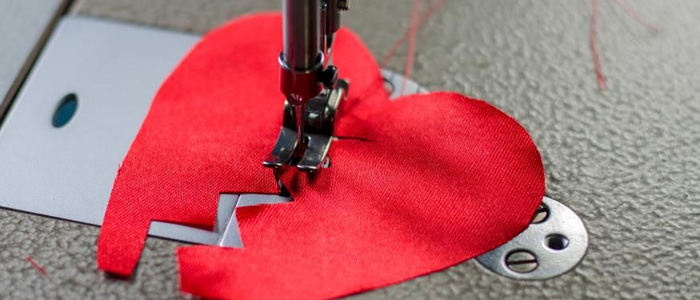
Earlier, we discussed situations in which we might inadvertently hurt someone or say something harsh, and talked about how to avoid such situations.
Now our topic is what happens when we ourselves are the injured party, when someone has hurt us.
Apparently, the first to be blamed are our family members and, above all, our husbands. Let's say your husband made a cutting remark and now wants to apologize.
First of all, bear in mind that a man's most sensitive spot is his kavod, meaning honor, respect. That is why asking for forgiveness is very difficult for a man. To do so, he has to admit that he is “at fault”: “I'm sorry, I made a mistake, I was wrong.” Men find this admission harder than women do. So when a husband finally does decide to ask for forgiveness, that needs to be greatly appreciated.
Second, precisely because men find it so difficult to ask for forgiveness in words, they express their apologies through actions.
Sometimes a wife really is deeply hurt: her husband has done something truly appalling and hurt her feelings. She can see that he is trying with all his might to apologize, but it is hard for him, more than he can manage. Instead, he suddenly makes her a cup of coffee and adds a slice of cake (one he has bought, or cut from whatever is in the refrigerator—that happens, too)…
A wife who is seriously hurt may say: “What, do you think I need your coffee? Why would I want coffee now? You should apologize, not bring me coffee! You think you can hurt me like that, say such hurtful things, and then make it all right with one cup of coffee? And it's all over? And I've instantly forgiven everything—because of a cup of coffee?!”
But in fact, it isn't just coffee. That coffee was made with the thought: I'm asking for forgiveness. Yet it is so hard for the husband to say this in words that he does what he can, hoping that his wife will accept his apology in this form. A wise woman who understands her husband's nature will see that this coffee is akin to his deepest, most sincere apology.
Some husbands suddenly start helping around the house by way of apology. A husband gets up to wash the dishes. “Why are you doing the dishes? I'm terribly angry at you and hurt, and you're washing dishes?! Ask me to forgive you!” But for him, in this situation, washing the dishes is an apology. Or a husband suddenly makes an extra trip to take out the trash, starts repairing something, or goes to the store with a shopping list, even without his wife urging him—this is his way of asking for forgiveness.
Think twice before reacting.
Don't say: “Don't help me! Don't hurt me or help me! Since you've hurt me, I don't need your help!” You need to be wiser and see what lies behind that help. A man finds it very hard to swallow his pride. But in this way he is still trying to ask for forgiveness, even if he doesn't put it into words.
If a woman is wise and knows how to see what lies behind actions, she will understand that this is a way of saying “forgive me” without words. You can try to “read” it for him: a plate—“I'm asking for forgiveness”; a glass—“I am at fault”; cutlery—“I'm very sorry.” Of course, this is not at all the same as hearing the words. But you can learn to accept what your husband is capable of giving. He cannot apologize and put his pride aside, but his actions are an apology in a different form.
You can respond to such an apology by saying: “All right. I accept your apology in this form.” And return to the normal rhythm of life.
When the bond between spouses is deep and strong, and the wife is willing to accept reconciliation even when her husband cannot say the right words, it reassures him. Next time, besides trying not to hurt her, if it does happen nonetheless, he will find it easier to express his apology aloud. He will be more confident that his wife will accept his attempt to make peace. But if this time the wife escalates the conflict, drags all previous quarrels into this one, starts “settling scores”… “You're not really sorry for what you've done! Say it in words! This isn't an apology from the heart. I don't see any true remorse in you”… Next time he will think: “That whole treatise of torment will start again! I'd rather not ask for forgiveness at all.” We need to learn to smooth over these rough edges and be more understanding, even when the wound really is painful.
The first man was made from the dust of the earth—a soft, light material—while the first woman was made from a rib, which, on the contrary, is hard and unyielding.
Every scratch remains on bone, and it is not so easy to erase it. That is why it is harder for a woman to make peace. But if you draw a line in the earth, in the dust, it disappears very quickly—at the slightest breeze. A man finds it hard to ask for forgiveness, and a woman finds it hard to accept an apology. Such are our traits; there is nothing to be done about it. So if a man goes against his own traits, his sense of honor, and asks for forgiveness, a woman, too, needs to go against her nature, forgive, and “cross it out.” This is hard work on innate traits that are practically fundamental to every woman.
The Torah contains many examples of how important it is to work on our character traits. When the second Jewish home in history is being established, Abraham sends Eliezer to Haran, to the family of his brother Nahor, to find a wife for Isaac, even though Eliezer had a daughter of his own whom he dreamed of marrying to Isaac. Yet although Eliezer himself was a righteous man, the foremost man in Abraham's household, he was a Canaanite, and their lineage has bad traits that cannot be eradicated. Nahor's household, however, although they were idolaters, had no inherited bad traits that could harm the Jewish people in the future (Rambam).
So although our feminine nature finds it hard to accept apologies and "cross out" grievances, it is worth working on ourselves and trying to change this trait.
to be continued
Prepared by Mrs. Zissi Skarzhinskaya