Rebbetzin Leah Gans
Lesson Four. Yaakov’s Truth
Another lesson we must learn from Yaakov is his defining quality. When we read the Passover Haggadah, we find these lines: “Thus said the L-rd, the G-d of Israel: Your fathers lived beyond the River (the Euphrates) long ago, Terach, the father of Avraham and the father of Nachor, and served other gods. But I took your father Avraham from beyond that river and led him throughout the land of Canaan, and multiplied his descendants, and gave him Yitzchak. To Yitzchak I gave Yaakov and Esav.” With Avraham, everything is clear (Genesis 21:12): “…through Yitzchak shall your offspring be called”; there were no other options, since Yishmael was not Sarah’s son but the son of a maidservant.
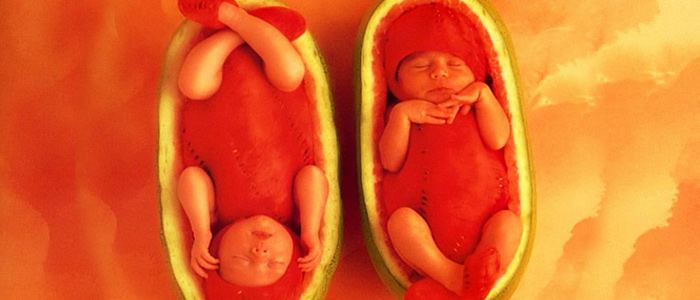
But Yitzchak seems initially to have two sons who are twins and appear equally virtuous. It is not like what we learned in kindergarten: Mommy Rivkah is pushing a stroller with two twin babies, both wearing kippahs and sporting cute curls, except that one is looking at a book about Shabbat while the other is catching a cat by the tail.
Rivkah understood that the twins were as different as heaven and earth, because she had asked about this while she was still pregnant. But she kept it to herself, and Yitzchak knew nothing. So the twins received the same upbringing. The same wine was poured into two vessels, but in one it turned sour. Apparently, the vessel itself was to blame.
What did Yaakov have that Esav did not?
Yaakov’s defining quality was Truth (emet), also known as Splendor (tiferet), as it is written: “Grant truth to Yaakov, kindness to Avraham” (Micah, 7:20). This is precisely why he ultimately merited inheriting Avraham’s blessing (Genesis, 28:4): “And may He give you Avraham’s blessing, to you and to your descendants with you, so that you may inherit the land where you sojourn, which G-d gave to Avraham”—this is how Yitzchak blesses him before he leaves to find a bride.
Yaakov is called a man of integrity (tam, also translated as “simple”) and a man of truth.
At first glance, there seems to be little simplicity or truth in his conduct—he appears much more cunning than his father and grandfather. We see how he buys his brother’s birthright “by deception” and then receives the blessings due to the firstborn. But a person of integrity and truth is not someone who takes no interest in anything beyond his tent and his books. It certainly does not mean that he does not know how to conduct himself among deceivers and evildoers such as Esav and Lavan. On the contrary, Yaakov knew that Esav placed no value on the birthright, so the stew would be more useful to him. What looks like deception in Yaakov’s conduct reveals itself as truth upon thoughtful study.
This quality of Yaakov’s is important in every Jewish home.
Children must know that we take truth very seriously. If a child tells the truth, the child will be forgiven, while lying is the worst thing the child can do. This is how we raise people whose defining quality is truth and splendor.
Prepared by: Mrs. Zissi Skarzhinskaya