Chaya Goldman
The bell rang at the end of the last lesson. Within a few minutes, the classroom was empty, and only I remained to finish what I had not managed to complete during the Gemara lesson. Three more lines, and I quickly put all my books and notebooks in the cupboard and headed for the classroom door. At that moment, two people entered the classroom, and my mouth fell open in astonishment: they were the principal of the cheder and the millionaire Gershel Brachfman, whom all the pupils knew. Our cheder had been built with his donations and named “Blessing of Mordechai” in memory of his father.
I was terribly embarrassed, but still approached the millionaire and held out a trembling hand. He shook it warmly and asked my name. “David Falk,” I mumbled in reply, and turned again to leave, but Mr. Brachfman stopped me:
- Could you help me?
I was surprised—such a wealthy man needed my help? Could this be a joke?
However, Mr. Brachfman pointed to the cupboard of books and asked:
- Could you help me put things in order here?
I blushed. Books and notebooks were piled up in disorder, hastily shoved onto the shelves. I myself had finished my work a few minutes earlier and shoved my books into the first space I could find. To be honest, until then I had never thought about how the cupboard looked. The visitor's implied reproach was, to put it mildly, rather unpleasant.
- I'll tidy it all up! – I said apologetically. Mr. Brachfman approached the cupboard, and the principal said: “It's all right. David will tidy everything himself.” He was embarrassed too, and I can understand why. Our cupboard, like those in many other classrooms, was not a sight worth showing sponsors.
The famous millionaire, however, seemed to have forgotten his standing. He walked up to the cupboard and began taking out books. Naturally, the principal and I immediately joined him. The three of us began sorting the books: Gemara volumes in one pile, Chumashim in another, and math books and notebooks in an entirely separate pile. Our visitor directed us, reminding us that if we stacked the books horizontally, we had to arrange them in order of importance: the Chumashim had to be at the very top, beneath them the Prophets, then the Writings, and so on. Holy books must be treated with particular respect.
The work was in full swing, but neither the principal nor I could understand why Mr. Brachfman had chosen to take on this particular task. Seeing our embarrassment and bewilderment, he decided to share something with us:
- In return for your help, I'll tell you a story. I want David to tell it to all the cheder's pupils tomorrow, and this will be the start of a major project.
He took several large-denomination banknotes out of his pocket:
- This is for prizes!
The principal thanked him with all his heart. It became clear that there was something special behind his attention to the holy books.
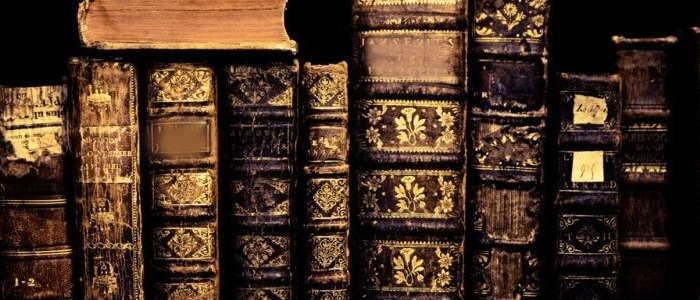
- Before the war, my father lived in a small town near Berlin. He was an attendant at the synagogue. His work was to arrange the tables and chairs neatly, set out pies for Kiddush on Shabbat morning, and, of course, care for the holy books: put them back in their places, mend torn pages, place those that could no longer be repaired in the genizah, and so on. [It should be noted that no printed material containing words of Torah may be thrown away. All old holy books, magazines, and the like are placed in a special place—a genizah—and later buried in the ground—translator's note.]
The morning after the infamous Kristallnacht, Father left the house in great fear. The streets were littered with shards of glass: these were the remains of synagogue and Jewish shop windows shattered by an enraged mob of Nazis and their accomplices. That night, many Torah scrolls and other holy books had been burned. No one knew what awaited them the next day. Father went to his beloved synagogue and looked around in horror: the remains of burned and torn books lay scattered on the floor. Father took a sack and, with anguish and reverence, began filling it with the sacred pages. He gathered everything he saw and carried it to the genizah. Outside, he noticed hundreds more pages from other synagogues being swept along by the merciless wind. Father gathered everything he came across and kept going.
In the days that followed, he never stopped working: he gathered all the half-burned, trampled, and desecrated pages of Jewish books, kissed them as one kisses a beloved child, and placed them in sacks. Prayer books soaked with the tears of righteous Jewish mothers fell onto pages of Gemara describing the great sages who had sacrificed their lives for the Torah… Notebooks belonging to Torah scholars, filled with their wonderful insights, lay alongside the notebooks of cheder pupils, in which they had painstakingly written: “And Abraham the Hebrew was on the other side from the entire world…” Defiled scrolls of the Torah, the Prophets, and the Writings were gently rolled up and carefully placed in sacks… After filling them, Father went and, with tears in his eyes, dug pits and buried the books in accordance with halachah. Then he returned with empty sacks and carried on… Nazis hurried about around him, but they left him alone. They laughed mockingly at him and pointed weapons at him, but in the end did him no harm. Father clearly saw that he was being protected from Above in the merit of his efforts to save the holy books from destruction and disgrace. He survived the entire war. Later, he often told us about his miraculous deliverance.
Reb Gershel caught his breath and continued:
- Many years later, when some of the Nazi archives were opened to the general public, my friend, Reb Menachem Hermes, a passionate researcher of the history of Europe's Jews, went there. We expected that afterward he would surely have something interesting to tell us.
Yet when he returned, the expression on his face was impossible to define. Was he shocked, surprised, or shaken…
- Gershel, – Menachem said to me, – please call your father.
When Father arrived, Menachem remained silent for a long time, gathering his courage. Then he asked Father to tell the story of his deliverance during the war once more—a story that, as my childhood friend, he had heard many times. After that, he finally brought himself to speak:
- You know, Reb Motl, you are mentioned in the German archive.
- Me?!
Father was, of course, very surprised. What had he done to “deserve” being mentioned by the Germans?
- Among the documents I read was a list of names of mentally ill Jews who, it had been decided, would be kept as “museum exhibits.” I found your name on the list, Reb Motl! It said that you constantly wandered the streets, collected all the dirty scraps of paper, and kissed them. After gathering piles of such papers, you would then bury them in the ground. The document emphasized that this was a man whose insanity was so obvious that he met the required criteria…”
Reb Gershel fell silent. Tears glistened in the corners of his eyes. Neither my eyes nor the principal's remained dry. But now we felt no embarrassment or shame—the book cupboard was tidy and reflected true respect for holy books. We knew that it would stay that way forever—a reminder of what truly protects the Jewish people.
The school bell broke the silence. We could not help smiling as the classroom filled with the melody of children's voices…
Translated by L. Shukhman.