Rebbetzin Leah Gans
Reflected Love
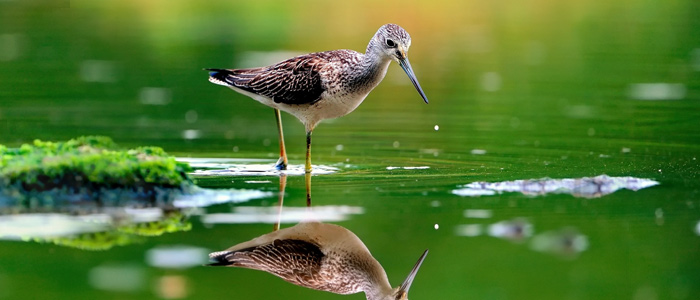
“As (in) water face reflects face, so one person's heart reflects another's” (Proverbs, 27:19). When a person looks into water, they see their face reflected. If they smile, the reflection smiles; if they frown, the reflection frowns. It is the same with the human heart. The heart senses what is in another heart.
If a child feels loved, they will try to bring pleasure, nachat ruach, to their parents. If a mother tells her little one: “You behaved so well! Well done!”—before you know it, the child is off tidying up their own mess, even though they have not been asked to do so this time—simply to please their mother. If we find something to praise a child for (not so that they will later do what we ask, but simply to give them the praise they crave), the child will want to do something nice for us in return, to reflect what they have received in their heart.
A young woman studying at a seminary comes home. Her mother greets her: “I'm so glad you're home!”
And if she comes home early: “What a lovely surprise! How nice that you’re home early today,” even if her early arrival disrupts our plans… If, on the other hand, a daughter announces that she has her own plans for the day, and her mother was counting on her but decides to let her go anyway, she should say so: “I always appreciate your help, and I love you very much. Although I had other plans today, I’m letting you go, even though I was counting on you and it will be hard for me.” Still, if this does not work for the mother, she can lovingly explain that she objects to her daughter’s plans, emphasizing how important her help around the house is.
Children Are Egocentric
If the atmosphere at home is calm, a child is sure that it is because everyone is pleased with him. If the atmosphere grows tense—for example, when there are problems earning a living and the parents argue—the child senses the tension and thinks he is to blame for the unpleasant atmosphere at home. The child immediately blames himself: “They don’t love me. It’s my fault. They’re unhappy with me.”
Children find it hard to understand that a tense atmosphere may have nothing to do with them. So children older than three, who are able to understand, should be told that they are not responsible. There is no need to say that financial difficulties are to blame, but you can say: “Do you feel that Mommy is upset? It’s not because of you. Mommy has some problems, and that’s why she’s worried. But it has nothing to do with you. I love you very much. You’re a wonderful child.”
The Child Has Grown
Why do children hear less about their parents’ love as they grow older? I see two main reasons: emotional reserve and the fear of spoiling them.
Talking to an older child about your feelings requires a certain openness. Some parents are naturally more open, and hugging and kissing their older children comes easily to them. Others feel shy or embarrassed, or think they will embarrass the child. But if we understand that this is the only way to raise a well-balanced person, an emotionally healthy child, we will be able to make ourselves do it. At first it will feel artificial and forced, but then it will become easier and easier. We simply need to know how important it is.
Rav Dessler liked to quote Sefer HaChinuch: “A person behaves in accordance with his actions, and his heart and thoughts always follow his deeds.”
If, despite the difficulties, a parent changes his behavior and begins showing his child love, it will gradually become a habit.
The fear of spoiling a child with love is not quite justified. You can spoil a child with possessions, presents, and sweets. But it is hard to spoil a child with expressions of love, because love is nourishment, not a supplement. If a child’s love language is gifts, they should be accompanied by words or a note: “I’m giving you this because I love you.” It is important to emphasize that what comes first is not the gift, but the giver’s attitude, feelings, and love.
Love Creates an Emotional Bond
A group of young men were planning a very dangerous trip on their own. Of course, it had to be kept secret from their parents. Everything was ready, but suddenly one young man, who was the life of the group, backed out. He explained: “My father loves me so much and does so much for me—I can’t do this to him, even if he never finds out, because I know he would be very unhappy about it.”
This is what we all want to achieve: an emotional bond so strong that a child feels unwilling to take part in something that would upset his parent.
Love Includes Taking an Interest
It matters to a child that we take an interest in what interests him: his achievements at school and his extracurricular activities. We need to listen, and under no circumstances criticize or offer advice unless we are asked for it. Those who are listened to feel more secure: even if the conversation does not resolve their difficult situation, they have received support.
A child who has no one to listen to him remains caught up in his own feelings and mistakes, withdraws into himself, and feels alone.
Love is protection; it is the environment a child lives in, his nourishment, and an emotional “basic necessity.”
Parents who want to raise an emotionally healthy person need to invest effort in their emotional bond with their child and in showing him love.
Prepared by — Mrs. Zissi Skarzhinskaya