Basya Tsybukmakher
Preparation
In my long-ago Soviet childhood, there were many celebrations. We would make an occasion out of practically anything, without worrying about its meaning or substance.
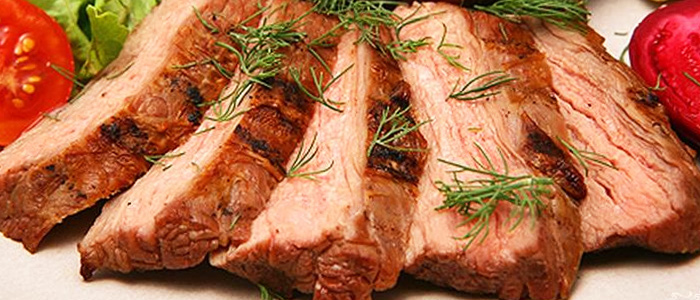
Every such family gathering was invariably accompanied by an intoxicating aroma: meat with garlic, roasted in the oven. It was either a piece of beef with lots of slits cut into it, stuffed with sliced garlic cloves, rubbed with salt and pepper, wrapped in three layers of foil, and left to cook slowly for an hour and a half to two hours.
Or poultry. That is what we will look at in more detail.
You can cook any poultry this way, even those utterly boring breasts. With breasts, the trick is not to leave them in too long and dry them to death. So it makes sense to put them in an oven heated to its highest setting for 15-20 minutes; then turn it off and—without opening it under any circumstances!—leave the meat inside until it has cooled completely.
But we handle fattier, more tender, larger cuts differently.
Don't expect exact proportions from me: I always prepare meat "by eye." That means we need enough seasoning to coat the meat generously, and salt to taste.
So. Finely grate plenty of garlic or crush it in a garlic press. Mix it with salt, pepper, and whatever seasonings your heart desires. The more spices and herbs, the better.
Here are a few options:
khmeli-suneli; thyme (also known as wild thyme) and rosemary; a good, fragrant curry powder; a blend of ginger, sweet paprika, and cinnamon... and so on. Even a good vegetable bouillon powder, if nothing else is on hand (in that case, of course, no salt).
If the meat is lean (such as those same breasts), add olive oil and work the spices into a fragrant paste. A turkey leg, for example, does not need this: you can coat it with dry spices. If you like the combination of sweet and savory, you can add a little honey.
Rub the meat generously and vigorously with the seasoning, wrap it in plastic wrap, and put it in the refrigerator to marinate—for at least two hours, or overnight if you like.
Take the meat out of the refrigerator and remove the plastic wrap, but leave the seasonings on. Place it in a suitable dish, pour a little water into the bottom, and put it in a preheated oven (but not one heated to its highest setting). From time to time, turn it over and add a little water as needed.
Roast until done (you can check this by piercing the meat in its thickest part with a wooden skewer; as soon as clear juices begin to run from the puncture, it is ready).
This meat is delicious both hot, as a roast worthy of serving to guests, and straight from the refrigerator the next day: sliced, with bread or pita, hummus, mayonnaise, salad, olives, pickles...
Experiment, ladies and gentlemen.
Kitchen measures
| Ingredient | Cup | Tbsp | Tsp |
|---|---|---|---|
| Wheat flour | 140 g | 10 g | 3 g |
| Sugar | 200 g | 12 g | 4 g |
| Salt | 290 g | 18 g | 6 g |
| Butter | 230 g | 15 g | — |
| Powdered sugar | 120 g | 10 g | 3 g |
| Honey | 320 g | 22 g | — |
| Cornstarch | 140 g | 10 g | — |
| Cocoa | 140 g | — | — |
| Oil | 200 g | — | — |