Rabbi Nachum Shatkhin
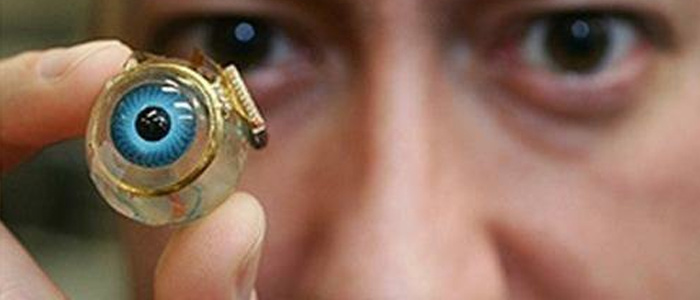
“An eye for an eye, a tooth for a tooth, a hand for a hand, a foot for a foot” (Exodus, 21:24).
Tractate Bava Kamma of the Babylonian Talmud explains that the wording of this verse should not be understood literally, and that it refers to monetary compensation for the damage caused.
The Vilna Gaon says that the verse itself contains a hint of this interpretation. Instead of the word תחת (under), it would have been more appropriate for the verse to use the word בעד (in exchange for). Not עין תחת עין, but עין בעד עין. Why was this particular word chosen?
If we take the letters that follow the letters of the word עין in the alphabet of the Holy Tongue, we obtain the following: beneath the letter ע is the letter פ; beneath the letter י is the letter כ; beneath the letter נ is the letter ס. This gives three letters פ כ ס (peh, khaf, and samekh). These are also the letters that make up the word כסף (kesef), meaning money. Thus, the verse itself contains a hint that damage to an eye must be compensated with money—money for an eye.
As stated above, tractate Bava Kamma says that compensation for a lost organ must be paid in money.
But why did this law have to be conveyed through such a hint, rather than stated explicitly, as it is explained in the Oral Torah?
The Chazon Ish says that we often find in life that the severity of a punishment itself has a greater impact on people’s minds than its actual implementation. For example, tractate Makkot (7a) tells us that our Sages describe a Sanhedrin that carries out an execution once in seventy years as “one that sheds blood.” From this we can understand an important point: the laws concerning a murderer, his trial, and his execution not only teach us the law itself, but also reveal the Torah’s attitude toward human life. This teaches us how precious human life is, even if it is the life of a despicable murderer!
The same is true of our verse. When the Torah simply writes “An eye for an eye…,” we should recognize how severely the Torah regards someone who harms another person. Although the actual punishment is monetary compensation, the way the verse expresses this affects human feelings and instills a stern attitude toward acts of this kind.