Basya Tsybukmakher
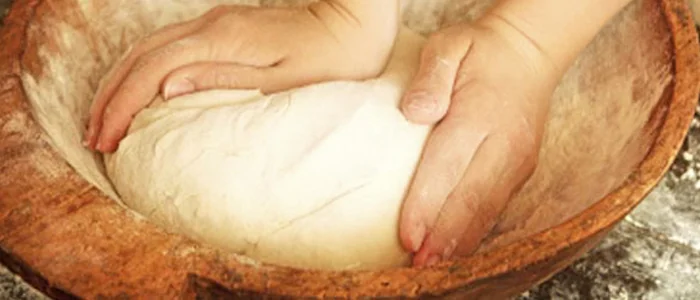
In the Elyashiv family home (Elyashiv was Rebbetzin Batsheva Esther Kanievsky's maiden name), hafrashat challah —the act of separating challah—was the spiritual high point of the entire week.
Rebbetzin Sheina Chaya, Batsheva Esther's mother, fulfilled this mitzvah with reverence every Thursday evening. Immediately after separating challah, all the women in the Elyashiv family recited a special prayer and read Tehillim.
In those years, few people had an oven at home, so the older girls—Batsheva and Sarah—would take the braided challahs to the nearest bakery in the Beit Yisrael neighborhood, a five-minute walk from their home. After carrying the heavy iron trays of challahs to the bakery, the girls could use the large baking oven for a few coins. Once the challahs were ready and had cooled a little, Batsheva and Sarah would remove them from the trays and carry them home.
After her marriage, Rebbetzin Batsheva Esther Kanievsky often baked homemade challahs, but there were weeks when the Kanievsky family's table held ready-made challahs from a bakery. Everything changed in 1967, when several misfortunes struck their family within a short period: first, Rav Chaim fell into a pit on his way to the Kotel and was bedridden for eight months. Soon afterward, their son Shlomo was hit by a car near their home while crossing the road. Once again, Rebbetzin Kanievsky had to spend long days and sleepless nights in the hospital. After these incidents, she never forgot to thank the Almighty for miraculously saving her husband's and son's lives, and she committed herself to fulfilling the mitzvah of separating challah every week.
At first, the rebbetzin performed hafrashat challah on Friday mornings. Over time, however, more and more women expressed a desire to join her in this mitzvah, and Rebbetzin Batsheva Esther began baking challahs on Thursdays, just as had been the custom in her parents' home.
Before separating challah, the rebbetzin would explain the laws of this mitzvah to the women and girls who had gathered. After separating challah, when the inspired women shared their feelings with her, she would ask them to continue observing this mitzvah and make it a custom in their own families.
The challah separation usually proceeded as follows: the rebbetzin recited the blessing for separating challah and separated a piece of dough. Immediately afterward, she prayed and literally spoke with the Almighty for about ten minutes, remembering to mention everything the women had shared with her during the week. She then recited the special prayer said after separating challah. Once again, she petitioned the Almighty for all the women who had gathered, for each one individually, speaking about what she lacked. This sounds simple, but imagine how many prayers rose from the Kanievsky family home that day, when up to a hundred and fifty women gathered there every Thursday! Most had to remain in the library at that time, because the modest kitchen could not hold more than fifteen people at once (the kitchen was so small that there was not even room for a refrigerator, which had to be moved to the bedroom).
In the last years of the rebbetzin's life, more and more women came on Thursdays to take part in the mitzvah.
Neither the kitchen nor the library could any longer accommodate everyone who wanted to attend. The rebbetzin had to recite the blessing for separating challah as loudly as possible so that all the women and girls gathered there could hear it and answer “Amen.”
In his eulogy at Rebbetzin Kanievsky's funeral, Rav Yitzchak Zilberstein called her an exceptional teacher of the mitzvah of separating challah.
This was entirely justified, because it was thanks to the rebbetzin that thousands of women in the Land of Israel and beyond took this mitzvah upon themselves. Outside Israel, hafrashat challah is even more important, because in the Land of Israel, many mitzvot we can fulfill are connected to the land, while outside it, separating challah is the only one!
Rav Chaim Kanievsky was often asked: What was his wife's secret? How did she manage to inspire the hearts of so many women around the world to fulfill the mitzvah of hafrashat challah? Rav Chaim replied that the secret was her cheerful spirit and her joy in fulfilling mitzvot. Because this joy came from the depths of the rebbetzin's heart, it could not leave anyone unmoved.
Prepared by A. Shvalb