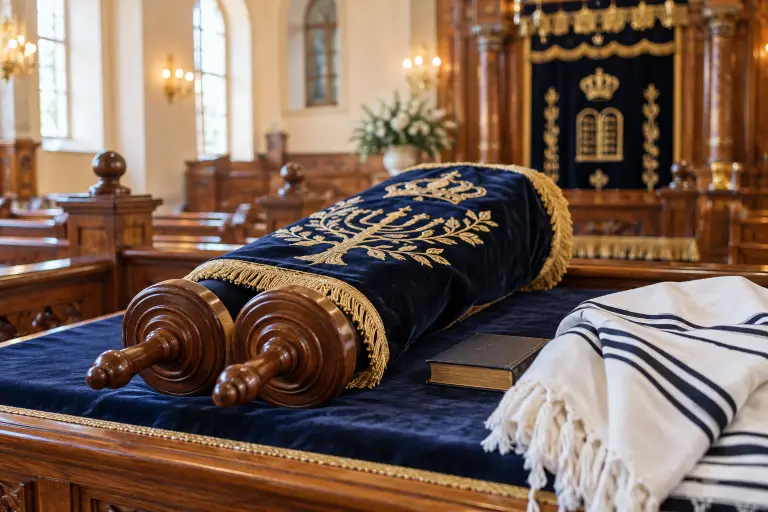
The events of Shabbat Chatan depend on the community to which the family belongs. Among Ashkenazi Jews, this Shabbat usually takes place immediately before the wedding (and is also known by the Yiddish name aufruf—being called to the Torah), while among Sephardi Jews it is strictly the first Shabbat after the wedding. In either case, the moment when the groom is called to the Torah in the synagogue is an exceptionally solemn and festive occasion.
• Symbolism: This expresses a wish for a sweet, abundant, and happy married life.
• Joy for the children: Children happily gather the candies that fall to the floor. It is also customary on this day to give them treats on behalf of the newlyweds.
When the groom is called to the Torah, a lively celebration unfolds:
Welcoming Him “Like a King”
When the groom (chatan) enters the synagogue, the entire congregation and the guests rise as a sign of respect. In Judaism, the groom is considered like a king during this period, so all attention is focused on him. Sometimes his place in the synagogue is decorated, and the fathers escort him to the congregation’s festive melodies.The Ceremonial Call to the Torah (Aliyah LaTorah)
The gabbai (the synagogue official) calls the groom to the Torah scroll with a special poetic chant, mentioning his name and status. Most often, an Ashkenazi groom is called for the final, most honored portion—Maftir—after which he also reads a passage from the Books of the Prophets (the Haftarah).A “Shower” of Candy
As soon as the groom finishes reciting the concluding blessings at the Torah, the synagogue bursts into festive song (usually “Siman Tov u-Mazal Tov”). At that same moment, tons of soft candies begin flying toward the groom from the women’s gallery (among Ashkenazi Jews) or from guests sitting nearby.• Symbolism: This expresses a wish for a sweet, abundant, and happy married life.
• Joy for the children: Children happily gather the candies that fall to the floor. It is also customary on this day to give them treats on behalf of the newlyweds.
A Festive Kiddush
After the morning service (Shacharit) ends, the congregation does not disperse. The groom’s family hosts a festive Kiddush in the synagogue (or at home)—a light buffet with wine, spirits, pies, lekach (honey cake), and appetizers, where everyone present can personally congratulate the groom and his parents with cries of “Mazal Tov!”Among Sephardi Jews, this Shabbat naturally flows into a continuation of the festive Sheva Brachot meals throughout the day, with the cups of wine mixed again at the evening and daytime meals.