Leah Gitl Shukhman
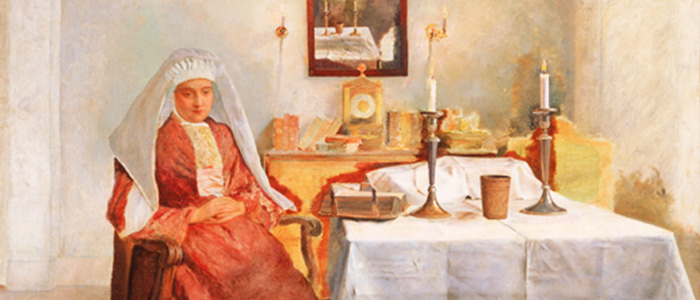
“I have a precious gift in My treasury; its name is Shabbat”
Our Sages tell us: Shabbat came to the Creator, downcast: “All the days of the week have partners: Sunday has Monday, Tuesday has Wednesday, Thursday has Friday. What about me?” “Do not be upset,” the Almighty replied. “You will have a partner too, and what a partner: the Jewish people! They will be your bridegroom, and you will be their bride.”
Shabbat is also called the “Queen”—Queen Shabbat. It is the apple of the Creator's eye; it is a crown, a diamond without equal. It is a channel for every blessing, connecting us in our lowly material world with the loftiest, purest spiritual worlds, from which we receive all blessings, all goodness and mercy. It truly is a precious gift that the Almighty has bestowed on us in His great mercy.
We do indeed try to honor Shabbat as best we can, preparing to welcome her as we would an important guest: we put our homes and ourselves in order, cook delicious dishes, bathe the children... Then we stand in prayer and invite our heavenly Bride: “Bo'i, kallah, bo'i, kallah!” (“Come, bride!”)
But do we truly understand how important Queen Shabbat is? Sometimes we welcome her having barely managed to prepare everything necessary, let alone rest and prepare ourselves inwardly!
Yet we are told that on the eve of Shabbat, everyone should try to set aside at least a few minutes to do a cheshbon nefesh: take stock of the past week, recall all their failures and successes, and try to understand how to correct their mistakes and sustain their successes.
Moreover, there is a well-known Midrash that Gehinnom (Hell) does not operate on Shabbat. A day off. An unfortunate soul that has suffered terrible torments all week can breathe easily for one day. And do you know exactly when this day off begins? Do you think it starts with the siren announcing the beginning of Shabbat? The great Chafetz Chaim reveals a secret to us: no, much earlier! At the moment when, throughout his life, a person would usually begin preparing for Shabbat. In other words, someone who used to begin early on Friday morning locks up the “cell” in which his soul languished as early as the morning and goes off to rest. But someone who barely managed to begin at noon looks at the first person with longing and envy...
However, it is important to know that the merit of this tremendous mitzvah—preparing for Shabbat—can benefit a person not only in the next world but in this one as well. The following remarkable story bears witness to this:
Rabbi Yaakov David Wilovsky (the Ridbaz) was one of the greatest Torah sages of his time. Once, when he was already advanced in years (at the time he was serving as rabbi of the city of Slutsk and head of the yeshiva), he fell gravely ill.
As he lay in bed, suffering from his severe illness, the rabbi suddenly saw his soul ascending. There, Above, judges were waiting for him.
“The verdict was unequivocal,” Rabbi Wilovsky recounted. “I was to die and return my soul to the higher worlds. However, I was allowed to speak in my own defense. I told the judges, ‘At present I am working on a commentary on the Jerusalem Talmud. As Your Excellencies know, there are very few commentaries on this Talmud, so this is a contribution of the utmost importance to the world of Torah.’”
“Well,” the judges said dismissively, “there are many Torah sages who will be able to complete your monumental work, necessary as it is. That is not sufficient reason to prolong your life.”
“Then,” the Ridbaz continued, “I tried to defend myself from another angle: ‘All my life I have given donations to help widows and orphans. Surely kindness is beyond price!’”
The members of the Heavenly Court replied impatiently: “That is not sufficient reason to prolong your life either. One can always find thoroughly upright and dedicated gabbaim (charity collectors) who will care for widows and orphans just as well as you! We have enough righteous people like that!”
In those seconds, which seemed to last an eternity, the Ridbaz felt utterly helpless. He wanted to live; he knew he could still do a great deal for this world, but he could not think of any merit of his that would tip the scales. And suddenly he remembered!
"Honored Judges," said the rabbi, "before you deliver your final verdict, I would like you to know that my wife and I welcome the Shabbat Queen at the very beginning of Friday (that is, on Thursday evening—translator's note)! By then, the house is already completely clean and tidy, a snow-white tablecloth covers the table, silver candlesticks gleam on their tray, olive oil shimmers with an amber glow in their cups, the Shabbat dishes have been prepared with love, and the fragrance of Shabbat fills the air. On Friday itself, I think about what else I can add in honor of the approaching Shabbat. It seems to me that there is no other Jew in the world who adds as much to Shabbat as I do."
The judges were speechless. This was the decisive argument. They had nothing to say against it. The Heavenly Court ruled that the Ridbaz's life should be extended by another 20 years.
During those years, Rabbi Wilovsky managed to finish his renowned commentary on the Jerusalem Talmud, come to the Land of Israel, settle in Safed, and establish a wonderful yeshiva with (even then!) 150 students.