Basya Tsybukmakher
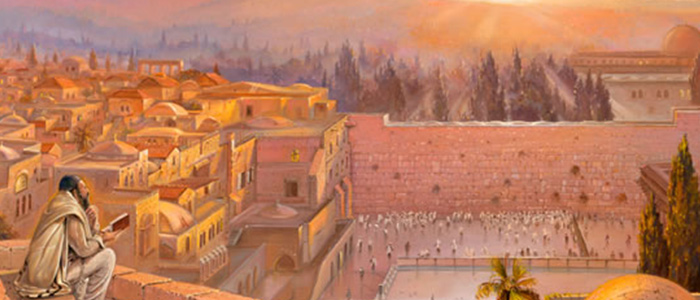
“Whoever mourns (the destruction of) Jerusalem will merit seeing it in its joy.” Talmud (Taanit, 30b)
The Fast of the 17th of Tammuz
Our Sages instituted a fast on the 17th of Tammuz because five tragic events in Jewish history took place on this day. The Mishnah (Taanit, 26b) lists these calamities:
Laws of the Fast of the 17th of Tammuz (according to “The Book of Our Heritage”)
The fasts of the 17th of Tammuz, Gedaliah, and the 10th of Tevet are less stringent than the fast of the 9th of Av, because they begin only with the first light of dawn (the exact time should be checked in a calendar) on the day in question and do not include the preceding night. Eating and drinking are therefore permitted during the night (on these days).
Other leniencies also apply on these days. Thus, a sick person is exempt from fasting even if his condition is not life-threatening. The same applies to pregnant and nursing women if fasting is difficult for them.
However, even those who are exempt from fasting may not arrange lavish meals or indulge in food and drink. They may eat only as much as necessary.
Children are also exempt from fasting, even if they are willing to fast voluntarily. However, for educational purposes, we must see to it that they eat only what is necessary to maintain their normal physical condition, and only the simplest foods, and that they share in the communal mourning.
On these days, washing, anointing the body, and wearing leather shoes are permitted.
On both the 17th of Tammuz and the 10th of Tevet, it is customary to observe all the additional restrictions that apply during the first nine days of Av.
A person who wakes during the night before dawn on a fast day may eat and drink only if he stipulated this in advance.
Otherwise, he is forbidden to eat or drink. There is an opinion that even in this case he may drink. The Zohar maintains that the law here is fundamentally different and does not depend on a condition stipulated in advance: a person who wakes during the night (before dawn) may always drink but may not eat.
On the 17th of Tammuz, at Minchah and Shacharit, we read Vayechal. In the Shemoneh Esrei recited individually (in a whisper), the blessing Shomea Tefillah includes the passage Aneinu (according to Sephardi custom, at both Minchah and Shacharit, and according to Ashkenazi custom, only at Minchah, although the cantor, when repeating the prayer, also inserts this passage at Shacharit—between the blessings Goel and Rofeh).
One who recites Minchah individually must include Aneinu in it, even if he intends to end the fast early for health reasons. However, anyone who has already eaten or drunk anything that day does not include Aneinu in the prayer.
Similarly, on a fast day, someone who is not fasting for health reasons or the like is not called to the Torah, since that day’s reading is connected with the fast. If, however, he is called up for any reason, he must go up and read the appropriate passage out of respect for the Torah.