Rebbetzin Leah Gans
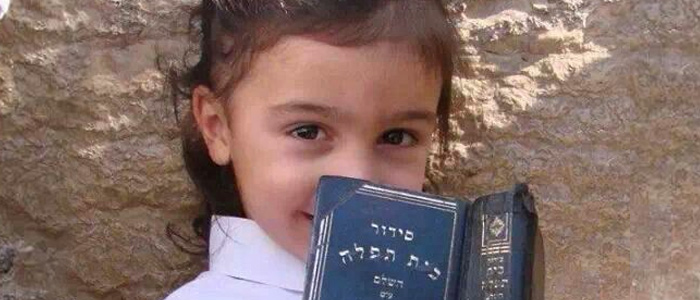
The blessings we recite can inspire fear of G-d to the same degree as thoughtful study of books on Jewish ethics (mussar). The true purpose of a blessing is to understand that, at this very moment, the Almighty continues to create the world, to fashion it, and at every stage there are daily miracles to which we have already grown accustomed. The goal is to recite the blessing, while hunger, thirst, and other sensations of need have been placed within us so that we may fulfill our purpose: to enthrone the Almighty in His world.
A blessing recited with kavanah, along with the awe of the Almighty and love for Him that it brings, nourishes our soul and gives us life. Food nourishes the body, while a blessing nourishes the soul.
Curses became blessings for the Jewish people, and there are two reasons for this. The first is the joy, confidence, and calm we experience as a result of reciting a blessing thoughtfully. The second is what is written in the book of Leviticus (26:40-41): “For they walked with Me by chance. I, too, will walk with them by chance.” Blessings, however, show that what happens is the complete opposite of chance: everything is precisely calculated, and everything is under constant supervision.
The following story appears in the book “Vezot HaBerachah”:
Rav Leib Bakst (head of the yeshiva in Detroit for 50 years) spoke about how important it is to be attentive when reciting blessings.
“The Chofetz Chaim, a great tzaddik of that generation, was traveling on a train from Radin to Lida to strengthen the foundations of faith (kashrut, Shabbat, family purity) in the city of Lida. Among the leading rabbis and prominent Talmudic scholars who came to welcome the arriving tzaddik was I, still just a youth. At the time, I was studying in Rav Yaakov Neiman’s yeshiva.
Suddenly, it became clear that there was nowhere for the visiting tzaddik to sit at the place where he was being welcomed! They hastily put several suitcases together so that the Chofetz Chaim could sit on them. When they saw that Rav Yisrael Meir would not sit down because those who had come to welcome him had nowhere to sit, they moved a little farther away. I stayed behind to guard the suitcases.
I noticed that the Chofetz Chaim had turned his attention to me. I was speechless with emotion. All I could manage to get out was my name and my father’s name, since the Chofetz Chaim knew him personally. Beyond that, however, I could not say anything. Then I heard Rav Yisrael Meir’s subdued voice. He said, as though speaking to himself: ‘Master of the Universe! Look, here is a boy who has left his father and mother, his brothers and sisters. And all this solely to study Torah!’ To encourage and strengthen me even more, the Chofetz Chaim took my hand and said: ‘My son! Recite blessings carefully! In this way, you will be saved from every calamity and sorrow!’”
Rav Bakst, who was a student at the famous Mir Yeshiva, adds: “I have faced many dangers in my life—in Russia, China, and Japan. Thank G-d, I managed to escape them all—in the merit of what the Chofetz Chaim told me. We learned that care in reciting blessings protects against calamities. And it is written: ‘Be vigilant about berachot to avert dangers; strive to recite 100 blessings (for men), because this protects the people of Israel from death every day.’”
We see that long before the terrible events unfolded in Europe, the Chofetz Chaim foresaw how many dangers lay in wait for the Jewish people. He showed the man who would become Rav Bakst the way to escape these dangers—reciting blessings carefully.
A second story from the same book, told by Rav Shlomo Yehuda Abanet.
“This happened during the Second World War. We—I, my wife, and my 4-year-old daughter—were sitting in a bunker in the city of Budapest, Hungary. We were terribly frightened. We wanted to flee in the hope of reaching the Land of Israel. We hired a local resident (a non-Jew) to guide us through the forests and across the border, avoiding the border posts. We waited eagerly and hoped that our dream would soon come true.
This guide turned out to be greedy and dishonorable. He led us into the forest and, without saying a word, abandoned us and fled. We were left in the forest, and two days passed. Thirst began to torment us. It was clear that there were no wells or anything of the sort in the area, but we still looked for some source of water. Finally, we saw a puddle of rainwater covered with mud and slime. I was so thirsty that I overcame my revulsion, which had initially made me nauseous. I recalled the words of the Mishnah (Berachot, 6:8): ‘One who drinks water to quench his thirst recites the blessing Shehakol nihyeh bidvaro (that everything came to be through His word).’ Then, filled with focused intent, I loudly recited the blessing ‘Shehakol’...
Besides our family, other refugees were taking part in this illegal border crossing—a family with a six-month-old baby. The moment I finished the blessing, the little girl began to cry loudly. Nothing could comfort or calm her, not even sweets. We were frightened, because enemies, such as the border guards, might hear such loud crying. Suddenly, we heard an approaching voice calling out to us: “Is there a crying baby here?” We answered yes, although we were afraid to move from the tension and fear. The voice came closer, and soon we saw a non-Jew carrying milk for the baby. We saw this as a sign from Heaven. In exchange for a large sum of money, we asked him to find us another guide to take us across the border. Soon we were on the other side of the border, and our guide supplied us with everything we needed.
Since then, I have been unable to forget the blessing I recited over a rainwater puddle, which showed me firsthand that “everything comes into being through His word,” that everything comes from the Almighty. Shehakol nihyah bidvaro—even water from a puddle has the power to revive the soul of every living being.”
Rabbi Dan Segal, one of the great mashgichim, related the following incident, which took place in Tunisia.
Two students were accompanying the rabbi through the city (it is customary for a rabbi not to walk alone). Suddenly, an armed bandit appeared in their path and said, “I want to kill the rabbi!” The students were horrified and began pleading with him to spare the elderly rabbi. They tried to bribe the bandit, but it did not work. Meanwhile, they tried to protect the rabbi with their bodies, shielding him from the would-be killer. The bandit kept repeating just one thing: “It is the Jews’ rabbi I want to kill! And if you do not run away right now, I will kill him anyway, but I will kill you too.”
The rabbi gestured to his students to run away and save their lives while they still could. And they fled. The bandit began approaching the rabbi with unmistakable intentions. The rabbi asked him to grant just one final request—after all, it is customary to honor a person’s last wish before an execution. The bandit agreed: “Hurry up!” The rabbi said that he would like to drink a glass of water before he died. The bandit gave him a glass of water. With great kavanah, the rabbi recited the blessing Shehakol nihyah bidvaro, thinking that only the Almighty decides who will live and who will die. Everything is in His hands!
When the rabbi finished drinking the water, a rider suddenly approached them. He turned out to be an officer in command of the bandits. He was no less antisemitic than the first man. When he realized what was happening, he shouted, “What, you have caught their rabbi?! You can kill Jews left and right, but do not touch their rabbi!” The bandit then let the rabbi go and began pursuing the students, but they were long gone.
Later, the students asked the rabbi why he had specifically requested a glass of water. Could that really have mattered before his death? The rabbi answered, “Do you think I needed a glass of water? No, I needed the blessing Shehakol nihyah bidvaro! And I needed to recite it with the Almighty’s Name and kingship—that is, with the intention of drinking the water (after all, anyone can simply say these words). I needed to sanctify the Almighty’s Name and strengthen my conviction that there is no one but Him. That is what saved me! At the moment when I effaced myself before Him, completely set aside my will before His will, and placed judgment in His hands rather than in the hands of that bandit, the Almighty saved me.”
Many dangerous things happen in our time. Every day, we hear about car crashes, plane crashes, and other horrors. Despite all this, we have a single powerful means of protection—thoughtfully recited blessings. Even one thoughtfully recited blessing a day (perhaps all the others will be recited with insufficient kavanah, but at least one) can serve as a shield against danger. It is impossible to imagine the extent to which a person can achieve hamtakat dinim for themselves (that is, transform the attribute of judgment into mercy)!
To begin reciting blessings properly right away, let us briefly examine the opening words of the brachot:
Baruch
When we say Baruch, we mean that the Almighty is the source of blessings in the world. All abundance comes from Him alone.
Bracha—blessing—recalls the word breicha, a pool. Just as a river basin fills from a spring, a blessing shows that abundance is connected to the Source—the Almighty. In this way, we ourselves connect with Him and receive our sustenance from Him.
Bracha also shares a root with the word berech—knee. This symbolizes bowing down, acknowledging the Almighty as our ruler. We set aside our ego and understand that everything comes from Him.
Atah
Atah—You. We can address only someone who is present beside us this way. Tehillim says (16:8): “I set the L-rd before me always; for (when He is) at my right hand—I will not falter!” The Almighty is not something undefined, unknown, or vague. He is here, before me, beside me, all around me.
Presence means a constant connection. Later in the blessing, we say, “…everything came into being through His word.” “His” is already more concealed. Why do we suddenly address Him from a distance?
The Almighty acts in the world in two ways: revealed and concealed. We see His revealed actions all the time; here we sense His presence, and He is revealed to us. But the Almighty’s might that is concealed from us, which no living person can comprehend, is beyond our reach.
That is why we first say Atah, to feel His closeness, and then, as the blessing continues, acknowledge that we cannot comprehend the Almighty’s true greatness.
Hashem
Hashem—the Master of all, to Whom we are subject. When reciting the Shema, we also have something else in mind: He was, is, and will be. But when reciting a blessing, it is enough to concentrate on His rule over us.
Elokeinu
Elokeinu—this means the Master of all powers. We should think about all the powers the Almighty has to watch over us, over each of us individually.
We could go on to examine each blessing in detail, but that is a separate, extensive topic.
My neighbor came up with a very interesting idea. It is well known that on Shabbat we do not reach 100 blessings (the twelve brachot in the middle of the Shemoneh Esrei are absent). She decided to place a pot containing a pleasantly fragrant plant downstairs by the staircase every Shabbat, a plant over which it is customary to recite “Borei atzei besamim.” Anyone going up or down the stairs can recite a blessing over the pleasant scent.
It is told of Rabbi Meshulam Dov Soloveitchik that when he was 4-5 years old, he heard someone back in Brisk reciting Asher Yatzar with extraordinary kavanah. Although many years had passed, he could not forget the state of mind with which the blessing had been recited. He said that it always echoed in his memory. Much later, he discovered who had recited the blessing that day—it was Rabbi Dov Ber Soloveitchik.
Rabbi Yosef Shlomo Horowitz, one of the Chafetz Chaim’s students, used to listen to the morning blessings of the mashgiach, Rabbi Yechezkel Levenstein. He would say, “Anyone who hears these blessings will inevitably grow stronger in their faith in the Almighty!” (There is no way they would not grow stronger in it.)
Everyone recites blessings, but each in their own way. When someone recites a bracha thoughtfully, they not only elevate themselves and all of creation along with them, but also influence those around them. A blessing recited aloud, with the appropriate mindset, can touch the hearts not only of the great sages of the people of Israel, but of any Jew.
Prepared by Mrs. Zissi Skarzhinskaya