Rebbetzin Leah Gans
A Sick Person's Prayer for Themselves Is Best
Hagar, sent away with Ishmael at Sarah's insistence, walked along carrying her son on her shoulders (he was sick and weak). When their water ran out, Hagar placed Ishmael under a bush and moved away so that she would not see his suffering. Weeping, she prayed nearby for her son to recover, while also fearing that she would witness his death. After some time, however, Ishmael prayed for himself, and the Almighty answered his prayer “as he was” (Genesis, 21:17), meaning in the condition (judging by his actions) in which Ishmael was at that moment, without taking into account the future behavior of Ishmael's descendants toward the Jews.
Although Hagar had seen angels and led a righteous life in Abraham's home, and Abraham took her back after Sarah's death (as Rashi explains, Keturah is Hagar), and her deeds were pleasing to the Creator like ketoret (incense, from the same root as Keturah), He accepted not her tearful prayer but “the voice of the lad.” Even Rabbi Shimon bar Yochai, a great master of the esoteric teachings, said of himself that he had not reached Hagar's level—and yet the Creator hears her son's “voice,” rather than her prayer. Why?
Because a sick person understands their own condition better. They know exactly what torments and wears them down. The Almighty accepts Ishmael's prayer—offered with all his heart and to save his own soul—more readily than his mother's prayer.
There is a well-known story about a rabbi who went from house to house collecting money for the poor of a small town. The weather was terrible: an icy wind was blowing, and snow was falling. The rabbi knocked on the door of a well-known wealthy man. The master of the house himself answered the knock, and the rabbi began telling him about the hardships that had befallen the poor and the shortage of fuel… The wealthy man politely interrupted him: “Honored Rabbi, let's go inside and close the door—it is very cold to stand outside. In the warm living room, I will be happy to hear everything the honored Rabbi has to tell me.” But the rabbi replied, “No, I do not want to go into the warmth. On the contrary, I need you to experience the cold felt by those for whom I have come to ask for money for heating and other needs.”
A healthy person cannot fully feel what a sick person is going through, so the sick person must certainly pray for themselves. This does not replace other people's prayers for them; their own prayer will simply be more effective.
Since we have begun discussing prayer for a sick person, let us consider it in a little more detail.
Tractate Nedarim (40a) states in the name of Rav Dimi that someone who visits a sick person encourages them to live.
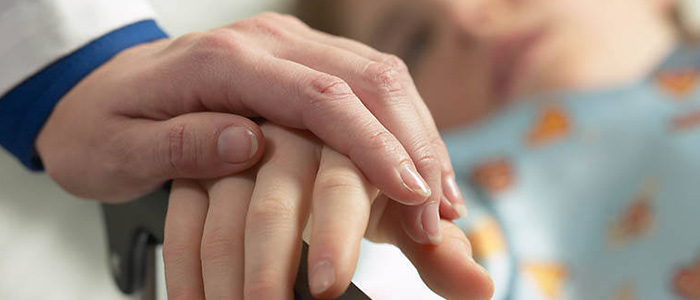
Someone who visits a sick person asks for mercy from Above so that the person may live, because the visitor is nearby and sees their suffering (this is quite different from praying for a sick person at home). The Shechinah is present beside a sick person. Tractate Nedarim states that “one should not sit on the sick person's bed, or on a bench, or on a chair, but should wrap oneself in a tallit and sit on the floor, because the Presence of the Almighty rests above the sick person's bed.” The Chafetz Chaim imagined himself speaking about the sick person directly before the Almighty—facing the Shechinah—and would plead: You are the great healer, You know how much this person has already been through, how much he has endured—heal him…
to be continued
Prepared by: Mrs. Zissi Skarzhinskaya