Rabbi Reuven Kuklin
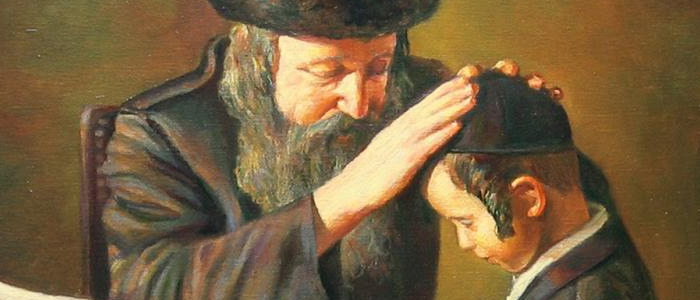
Lessons from Parashat Vayera - The Reward for Raising Children:
“And the L-rd said: Shall I hide from Abraham what I am doing?… For I know him, because he will instruct his sons and his household after him to keep the way of the L-rd, practicing kindness and justice, so that the L-rd may fulfill for Abraham what He has said about him” (Bereishit, 18:17-19).
Who can compare with Abraham in the number of his merits? He discovered the truth on his own and, having found it, called upon the whole world to embrace it. He showed boundless kindness to everyone around him and was happy to fulfill the Creator's will in whatever He commanded. Despite this, of all his many merits, the Torah particularly emphasizes the merit of raising children and teaching them to “keep the way of the L-rd.” From this, the Zohar (Bereishit, 188b) teaches that there is no greater reward in the World to Come than the reward for someone who raises his children to follow the Creator's path. The Zohar says that such a person will not be ashamed when his accusers are given the floor in the Heavenly Court.
Conversely, someone who does not make an effort to raise his children to fear G-d will be severely punished for it. In his letter to his wife, the Vilna Gaon writes: “…G-d forbid, the father and mother will be severely punished for their children's corruption.” He continues that “even if you constantly teach them (to follow the right path), but they do not accept (this upbringing), what terrible shame, bitterness, and disgrace that person will face in the World to Come.” That is, although parents who made every effort to raise their son properly will undoubtedly not be punished if they did not succeed, they will nevertheless feel shame in the World to Come. The Rambam (Laws of Sotah, 4:19) writes: “Someone who pays no attention to what his wife, children, and household members do, does not warn them, and does not continually watch their conduct until he is certain that they are upright and free of every sin and transgression, is himself a sinner.”
Why, then, does the Heavenly Court take the upbringing of children so seriously?
We can find the answer to this question by turning to the Vilna Gaon's letter mentioned above. In it, while explaining the severity of the punishment parents receive for a poor upbringing, the Gaon cites a Torah verse about a promiscuous young woman (Vayikra, 21:9): “She profanes her father.” He also quotes the Talmud (Sanhedrin, 52a), which says that a sinner who is the son of a righteous man is called “a sinner, the son of a sinner.” From this we see that a son is considered part of his parents and their continuation, and therefore the son's spiritual condition has a powerful influence on his parents' judgment.
In his book “Orchot Yosher” (the chapter “Raising Children”), Rav Chaim Kanievsky writes that his father, the great Torah sage, the Steipler Gaon, advised parents to study a book on mussar with their children beginning at the age of seven. The Steipler maintains that even five minutes of daily study is enough to accustom them to recognizing that the world has a Master whose will we are obligated to fulfill, that a person's life does not last forever, and that eventually he will stand before the Almighty to account for all his actions. The Steipler said that parents should choose an easy book to study with their children, such as “Orchot Tzaddikim,” so that they can understand what it says. In this way, they will gradually acquire fear of G-d, and their awe of the Creator will lead them to all good character traits. Such study is undoubtedly an effective means of teaching children to “keep the way of the L-rd” and will earn their parents a great reward.