Rabbi Reuven Kuklin
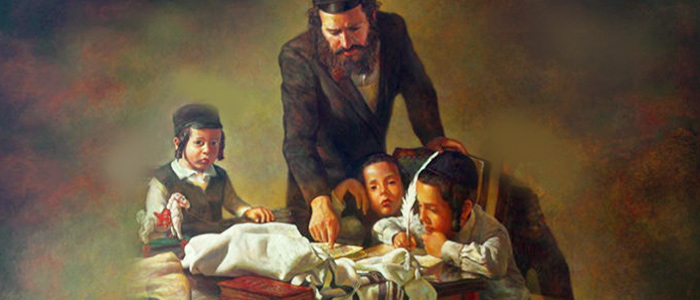
“Train a child according to his way, and he will not depart from it even when he grows old” (Proverbs 22:6)
It is well known that every Jew has his own unique inclinations and abilities, and a Jew must use them to serve the Creator.
King Solomon teaches us this principle in the Book of Proverbs (22:6) with the following words: “Guide a child according to his way, and he will not depart from it even when he grows old.” The Vilna Gaon explains: a child should be raised in accordance with his character (“the way that is his”) and his inclinations. If he is led along a path that suits him, he will not leave that path even in old age (“and he will not depart from it even when he grows old”). But if he is forced to change his nature, his character, he may obey for the moment—out of fear. Later, however, when “his neck is freed from the yoke,” he will certainly leave that path, because a person cannot overcome his nature.
We find an additional commentary on the verse quoted above that expresses another foundational principle of raising children.
This is the commentary of one of the greatest Torah sages and a great spiritual mentor—Rabbeinu Yonah. In his view, this verse teaches us to instill good character traits in a youth and teach him to do good deeds gradually, rather than burdening him at once with all the virtues we want him to acquire. Each time, Rabbeinu Yonah maintains, the teacher should teach the youth things that are close to his nature, understandable to his mind, and for which he has sufficient spiritual and physical strength. In this way, the teacher will gradually help his pupil advance, each time adding work suited to his nature. “Because,” Rabbeinu Yonah explains, “it is impossible to attain perfection all at once.”
From the commentaries of the Vilna Gaon and Rabbeinu Yonah, we learn two important rules for raising children: a youth should be guided and educated in accordance with his inclinations, and should not be burdened with everything at once.
Both of these instructions have the same reason: good character traits must become second nature, and this can be achieved only when a person's spiritual work is suited to his nature.
A student should be taught the wisdom of Torah in the same way. He should be taught things that are within his understanding. Regarding a profession, our Sages said (Kiddushin, 82a) that one should teach one's son an easy and clean (free of sin) profession. The Vilna Gaon, in his commentary on Tractate Berakhot (63a), writes that a person should be guided by similar criteria when studying Torah: his study should be pure (in its intentions—selfless, for the sake of Heaven), and also easy—not beyond his intellectual abilities—so that he does not grow weary of studying, and rebel against it. A student should also be taught in a calm, pleasant atmosphere, without excessive pressure. In his letter to his wife, after describing the proper ways to teach Torah, the Vilna Gaon adds: “Do not put too much pressure on the children, because learning takes root in the heart only when Torah is studied calmly.”
The above is true not only of the proper way to guide students, but also of a person's own spiritual work and Torah study.