Basya Tsybukmakher
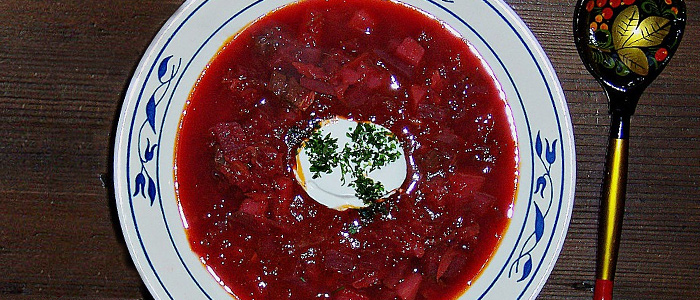
Preparation
Why do we keep talking about holiday food?.. Aren’t there ordinary weekdays, too? Don’t we need to eat, rather than just shed the pounds gained over the holidays? Don’t you sometimes want something cheap and cheerful, delicious, and homey?
At our house, there was almost always soup. “Home” meant “soup.” There were different kinds, but most often they were vegetable soups. “Meatless borscht” dropped in on us quite often, arm in arm with “meatless cabbage soup.” Want the truth? I couldn’t stand any of them—with the possible exception of chicken broth. Soup came seasoned with Grandma’s wisdom, such as “Eat it with bread!” “Why are you picking at your food?!” “You could go ice-skating in your bowl!” And my favorite: “You only think you’re full—in fact, you’re still hungry!” What could you do? Grandma had survived the war as an evacuee, with two small children.
So, want the truth? I still love them very much, all those soups. Because soup means home. I make them quite often, and have even served them to numerous guests. Always to rave reviews!
The season lends itself to it, so why not make vegetable borscht? Or cabbage soup (if you leave out the beets).
Don’t expect precise proportions from me: I make it by eye. If it turns out thick, I add water; if it turns out thin, I chop a little of this and that into the pot—a couple more potatoes, a little more cabbage, another handful of peas. And seasoning is strictly to taste.
Ingredients
The more vegetables you put in your borscht, the tastier it will be. The essentials, I would say, are onions, garlic, carrots, tomatoes (fresh, canned, or in the form of tomato paste), white cabbage, and potatoes. And, of course, beets, which are what actually make it borscht.
After that, it’s pure creativity. Kohlrabi, turnips, cauliflower, broccoli, leeks, bell peppers, green beans, parsley root and celery root, frozen green peas... Even capers, even black olives—borscht wears it all well.
Preparation
First, peel and wash the vegetables. Dice the onions and sauté them over medium heat in a little vegetable oil at the bottom of the pot you plan to use for the borscht.
Add coarsely grated carrots and sauté them together. Next comes finely shredded cabbage, then tomatoes. Toward the end, add bell peppers (green or red). Cook the vegetables gently until almost done.
Pour boiling water or vegetable broth over the sautéed vegetables. (Of course, freshly made beef broth works too. Then the borscht will be meat-based, with no sour cream.)
Add a bay leaf and a couple of peppercorns. Turn the heat way down: the borscht should bubble gently, rather than boil vigorously. Gradually add the remaining vegetables, diced, beginning with the beets.
The potatoes, frozen peas, and coarsely chopped garlic go into the pot last; at the very end, add fresh parsley. Simmer only briefly, so the color does not fade and the vegetables do not overcook.
Salting borscht to taste takes little skill. But achieving the delicate balance between salty, sweet, and sour requires some practice.
Ideally, the beets are sweet enough and the tomatoes have enough tang. In real life, this rarely happens. So there is no harm in helping things along: carefully, half a spoonful at a time, add lemon juice or really good vinegar; for sweetness, add a little sugar or, say, some spiced ketchup. Taste and adjust until the borscht suddenly tastes exactly as it should.
Gently bring it back to a boil and turn off the heat. Leave it on the hot burner to rest. Serve with bread (I prefer rye) and sour cream (which makes the dish dairy).
As already mentioned, without beets, the same soup immediately becomes cabbage soup, which is no less wonderful, though in a different way. It loses all its sweetness and half its tang (unless you add sauerkraut).
Enjoy your meal!
Kitchen measures
| Ingredient | Cup | Tbsp | Tsp |
|---|---|---|---|
| Wheat flour | 140 g | 10 g | 3 g |
| Sugar | 200 g | 12 g | 4 g |
| Salt | 290 g | 18 g | 6 g |
| Butter | 230 g | 15 g | — |
| Powdered sugar | 120 g | 10 g | 3 g |
| Honey | 320 g | 22 g | — |
| Cornstarch | 140 g | 10 g | — |
| Cocoa | 140 g | — | — |
| Oil | 200 g | — | — |