Rebbetzin Leah Gans
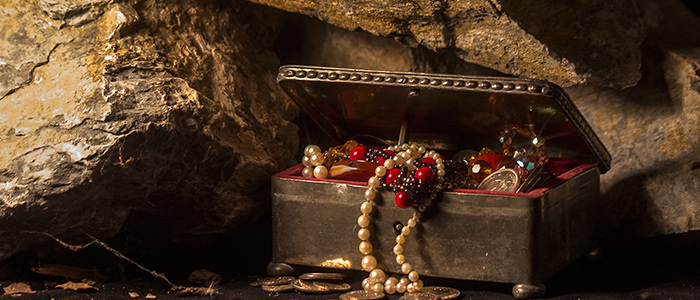
The more beautiful and valuable something is, the more it should be concealed from outsiders.
The Mishkan is a treasure of the Jewish people, a symbol of holiness. It was made at the Almighty's command, so it was perfect and beautiful. It was covered with several coverings for precisely that reason. Something beautiful and valuable should be concealed.
The same applies to the Torah. A Torah scroll is covered by a special me'il (mantle), which is also embroidered and beautiful, for hiddur mitzvah (beautifying the commandment). The scroll is not taken out casually—only when it is to be read from, or on Simchat Torah, and even then it is not carried around the synagogue without its mantle. If the scroll is moved from one place to another, an additional layer—a tallit or another covering—is placed over its me'il. Because of its great holiness and beauty, a Torah scroll must not be brought out casually.
Tefillin and a mezuzah are enclosed (meaning the text on parchment). No one hangs the parchment on the doorpost—the mezuzah is placed in a beautiful “house,” a small box, which is then nailed to the doorpost. Tefillin are placed in cubic batim (“houses”).
Respectability
When it comes to one's appearance in public, “commanding respect” is a more appropriate description. A woman's appearance should command respect. Her clothing should be neat and beautiful, but not seductive. There is a difference between beauty that commands respect and beauty that attracts gazes (and sinful thoughts). Beauty that inspires respect is appropriate for going out. Beauty that attracts gazes is not. For example, consider the already fading fashion for shimmering tops with sequins that could be flipped over. When adult women wore them, it was a real nightmare. A keychain is one thing, but an entire top, especially in sunlight…
It is known that every sinful thought a woman has prompted in a man's imagination is her sin. She receives punishment for each such thought in the mind of every man who has looked at her.
It is impossible to explain the concept of “moshech”—alluring, seductive—to little girls. But they generally understand the term “kavod,” respect. We can explain to girls that we are princesses, and we do not go outside wearing a crown every day, because it is too valuable and beautiful to wear daily—that would diminish its value, or it might simply be stolen. A princess wears her most valuable and beautiful things in the palace, because they suit the palace setting.
Beauty is our treasure, and we must safeguard it, rather than drag it through the streets as though it were something cheap. In public, a princess presents herself with dignity, so that it is immediately clear she is a princess.
to be continued
Prepared by Mrs. Zissi Skarzhinskaya