Rabbi A. A. Rabinovich
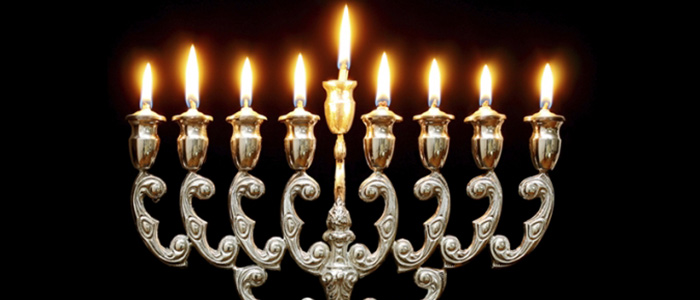
As is well known, under Jewish law the obligation to kindle the Hanukkah lights is fulfilled if each day one lights "Ner ish uveito"—"(one) candle for a person and his household", as mentioned in the Gemara.
"Vehamehadrin," the Gemara continues, meaning those who wish to enhance the mitzvah—"Ner lechol echad ve'echad"—"a (separate) candle for each member of the family" (except for the wife, since she together with her husband is considered one person).
"Vehamehadrin min hamehadrin"—those who wish to fulfill the mitzvah at an even higher level—"light one additional candle each day, according to the ruling of the school of Hillel". (Shabbat 21b)
The question naturally arises: why is the mitzvah of the Hanukkah lights, in particular, associated with so many "hiddurim"—enhancements? The expression "mehadrin min hamehadrin" appears nowhere else...
The answer lies in the very nature of the miracle that occurred on Hanukkah.
The miracle of the little jug of oil was necessary because only one small jug of pure, undefiled oil was found, enough to last only one day, while producing new pure oil required another seven days... And here we encounter a puzzle: under Jewish law, "tum'ah hutrah betzibbur"—if the majority of the Jewish people have the status of "tamei", ritually impure, they may nevertheless offer the korban Pesach, for example. In other words, they had every right to light the Menorah in the Temple with impure, defiled oil! This means that the Hanukkah miracle of the oil itself was entirely unnecessary! (See the Pnei Yehoshua commentary on the Gemara.)
But the Jews wanted to rekindle the Menorah specifically with pure oil, which was a higher standard, a greater "enhancement"—hiddur, even though any other oil would have been perfectly kosher in their circumstances.
Now it becomes clearer why kindling the Hanukkah lights is associated with so many hiddurim—enhancements: the Hanukkah miracle itself occurred only because the Hasmoneans wanted to fulfill the mitzvah of lighting the Menorah behiddur, in the finest possible way!
In remembrance of this, even today we strive to make every effort to fulfill this mitzvah with every possible hiddur.
The last, eighth day of Hanukkah has its own special name.
We call the eighth day "Zot Hanukkah", which translates as "this is Hanukkah". The standard explanation for this name is that on this day we read a passage from the Torah containing the words "Zot chanukat ha-mizbe'ach" - "this is the dedication of the altar".
The book "Shem MiShmuel" offers another, deeper explanation:
The number "eight" is associated in our tradition with the supernatural, "lema'alah miderech hateva." The world was created in seven days (six days of Creation and Shabbat). And the mitzvah of circumcision—brit milah—must be performed specifically on the eighth day. This mitzvah symbolizes the need to master natural forces and desires, to subordinate them to the Torah. And in the merit of this mitzvah, we are granted hanhagah lema'alah miderech hateva—the Almighty's "personal" Providence, which lies beyond the "natural," above nature.
And—"Zot Hanukkah"—this is what Hanukkah is! This is what happened on Hanukkah. Because the Hasmoneans fought against Greek oppression with supernatural strength and self-sacrifice, they merited siyata diShmaya—Divine assistance—above all the laws of nature, and so various miracles occurred for them.
We call the eighth day Zot Hanukkah because the number "eight" has a special meaning for us.