Arguments and Disagreements
8. The prohibition of lashon hara does not apply to speech directed against those who incite arguments and disrupt the atmosphere of unity in the Jewish community. But here, too, there are certain restrictions. Such speech must aim to extinguish the fire of discord, rather than the reverse. (This question is discussed in detail in chapter 27)
9. In some cases, to avoid perpetuating a quarrel, it is advisable even to sacrifice one’s pride and social standing.
10. A person should pay no attention to attacks and insults if he knows that they are a form of provocation and an attempt to draw him into an argument or political maneuvering. The way of Torah is to seek peace and unity, as it says in Mishlei[1] (3:13): “Her ways are ways of pleasantness, and all her paths are peace.” If a person has an opportunity to fulfill a commandment but would have to become embroiled in an argument or some scandal to do so, the sages advise refraining from fulfilling it in this case as well.
13. Shopping for Shabbat. If a person has enough money for either wine or Shabbat candles, he should buy candles. After all, if the house is dark, people may quarrel or hurt one another. The same applies when a person has enough money for either Hanukkah candles or Shabbat candles. He should buy a candle that will provide light on Shabbat. Rambam explains that we can learn these laws from the fact that it is permissible to erase the Name of the Almighty to restore peace between husband and wife.
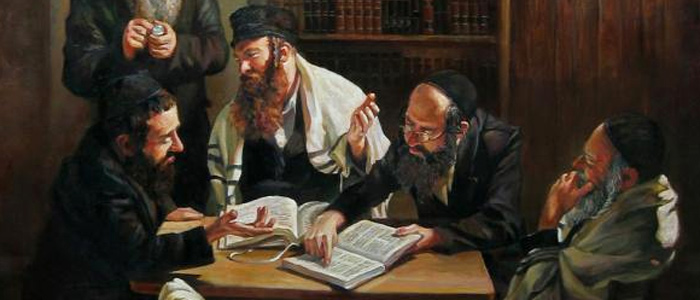
14. If people genuinely wish to arrive at the truth by examining a question and debating it, this is not considered a transgression.
The sages teach us that such debates will ultimately lead to peace and the correct resolution. The problem begins when personal interests or simply pride take precedence during an argument.
15. Although people hold different views, they must treat one another with respect and avoid unnecessary arguments. Through the merit of treating others respectfully, a person merits life in the World to Come. It is known that Rabbi Akiva’s students died prematurely solely because they did not treat one another with sufficient respect.
16. During Torah study, by contrast, heated discussion and debate become positive elements. It is even permissible to challenge one’s teacher’s arguments in order to arrive at the correct definition or understand the material better. But here, too, the desire to arrive at the truth and the correct resolution must always come first. One must also remember that even in the midst of a vigorous discussion, a teacher must be addressed with particular respect.
17. One must not study Torah in order to exalt oneself above others and show them how ignorant they are and how far they are from true wisdom.
Of such people, the sages said: “It would have been better for such a person not to have been born.” It is also forbidden to ridicule the words of the sages.
In addition, a person must treat his parents with the greatest respect and take care not to offend them in any way. If he sees that his father (or mother) is mistaken about something, he may make a remark only in the form of a question: “Doesn’t the Torah say such and such?” It is forbidden to contradict or affirm one’s parents’ words. (That is, to say “you are right” or “you are wrong.”)
[1] One of the books included in the third section of Tanakh—the Writings—is known in Russian as “The Proverbs of Solomon.” It is a collection of wise sayings by King Shlomo.