11. Although Torah study is considered a very important mitzvah, when there is no one to perform another important mitzvah, or when that mitzvah is incumbent only on a particular person, he must temporarily set aside his studies and do whatever is necessary.
However, when other people can fulfill that mitzvah, one may not interrupt Torah study to perform it.
12. When it comes to helping others, those closest to us come first. If a person needs to help both his parents and his children, he should help his parents first. If he needs to help both his children and his brothers, he should help his children first.
****
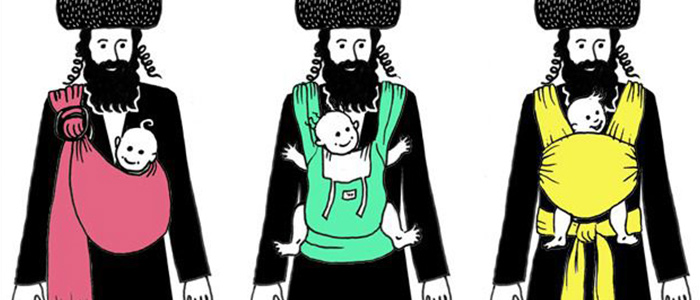
An avreich (a married yeshiva student) from a respectable family was studying in Lakewood. He was often late for morning prayers and sometimes did not come at all. One day, the mashgiach (the yeshiva's spiritual supervisor) approached him in the presence of the head of the yeshiva and asked him to explain the reason for this behavior. The young avreich said that he tried very hard to arrive at prayers on time, but every day he encountered a young woman whose children were constantly crying and shouting, and his heart could not bear it. One needed to be fed, another sent off to school, and a third wanted a drink.
“No one helps her, and it is hard for her to look after all the children at once, so I kept staying behind to help her and the children in some way,” said the avreich. The yeshiva's leaders were impressed by their student's noble behavior and wanted to know who this woman was.
“Perhaps she lives alone, without a husband?” they asked anxiously. “Perhaps we can do something to help her?”
The avreich lowered his head and answered quietly:
“She does have a husband… It's me.”
13. The mitzvah of helping others is not limited to the poor and needy. When help is needed, it is given to everyone, even the wealthiest. There is also no distinction between a man and a woman, a healthy person and a sick one, the living and even the dead.
14. The Torah warns us in several places that gerim (converts), orphans, and widows must be given special attention, offered every possible kind of support, and treated with the utmost care so as not to hurt them.
15. If a person violates any prohibitions concerning other people—for example, by stealing, causing damage, hurting someone, taking revenge, and so on—in most cases he also violates the mitzvah of loving one's fellow.
16. Conversely, when a person fulfills mitzvot governing relationships between people, he also fulfills the mitzvah of loving one's fellow as oneself. (For example, the mitzvah of saving a human life—both physically and spiritually; the mitzvot of honoring one's parents, returning lost property, visiting the sick, welcoming guests, comforting mourners, escorting the deceased, giving tzedakah, helping people, and so on.)