Keeping Far from Falsehood
6. When telling a story about someone, even if the story itself is accurate and faithfully retold, one must consider when, in what situation, and among whom one has chosen to share it. For example, if one says about someone, “He did not sell his chametz[1] (leaven)”—many people may take this to mean that the person being discussed does not observe the laws of Passover. Yet he may indeed not have sold his chametz simply because there was no leaven left in his home! Besides the prohibition against speaking ill of others, the prohibition, “Keep far from falsehood,” is also violated here.
7. If facts are deliberately distorted to make people laugh, and everyone knows this—for example, as part of an entertainment program—the prohibition is not violated. Especially righteous people, who follow the ideal of chassidut, try to keep away from jokes and performances based on manipulating facts, since a joke may sometimes be taken seriously.
8. Righteous people try to maintain purity of thought and do not allow themselves to entertain false ideas or to lie even in their minds. After all, our thoughts gradually turn into feelings, which in turn prompt us to act.
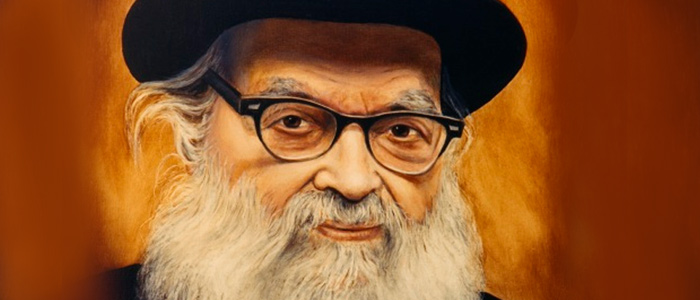
**** Rabbi Yaakov Kamenetsky was a very wise man of great integrity. Everyone who knew him sensed his profound aversion to lies and deception. He said that ever since he had grown old enough to understand what a lie was, he had never once told an untruth in his life, and it was precisely because of this that the Almighty had granted him health and longevity.
Honesty was so deeply ingrained in him that he found it very hard to understand his cheder teacher, who sometimes suspected him of lying (as he did all the other children) and even punished him for it.
When Yaakov was sixteen, Rabbi Nosson Tzvi Finkel, known as the Alter of Slabodka, invited him, along with other students, to a Passover Seder. Foods made from matzah meal were served.
For some reason, the young man was doubtful about the kashrut of these foods and decided not to eat them. When asked why he was not eating, he replied that he did not eat “matzah sheruyah”—soaked matzah. (Many people adopt a stricter practice and eat matzah on Passover only in its original form.)
In fact, no one in his family followed a stricter practice regarding “soaked matzah,” and, of course, he himself had eaten such matzah all those years. However, since he had already told people that he did not eat such foods on Passover, this became a new rule for him for the rest of his life. After marrying, he did not require his household to observe this stringency, but he himself always lived by what he had once said, lest, God forbid, it turn out that he had told an untruth.
It is said that Rav Kamenetsky once received a summons to report to a Russian army recruitment office. When he arrived, one of the officers accused him of having been there the previous day under a different name. The young man replied, “I have never lied in my life.” His words and earnestness impressed the officers so much that they let him go.
[1] During Passover, leaven must not remain in a Jew’s possession. There are various ways to dispose of chametz, one of which is selling it to a non-Jew. After Passover, non-Jews are usually happy to sell it back to Jews, because they receive more than they paid earlier. Nevertheless, during Passover the chametz belongs to them entirely, and they may do with it as they wish, even if it continues to be stored in a Jew’s home.