The Prohibition Against Hurting Others and Causing Distress (ona'at devarim)
20. One may not frighten other people, for example, by suddenly shouting behind someone's back, unexpectedly jumping out in front of them in the dark, and so on. The Rambam's words indicate that this, too, falls under the prohibition against “causing hurt.” There is no specific punishment for such acts in a Jewish court, but the person will be punished by Heaven. Children must also be taught about this prohibition, since, as we know, children's games often lead to such behavior. (If, at the moment a person frightened his friend, he was also holding or pushing him, he is obligated to pay a monetary penalty.)
**** On Purim, Avimelech threw an explosive charge out of the window. He lived on the eighth floor, and while it was falling, Mrs. Padenskaya had time to step out into the courtyard. Hearing the loud explosion, she was so frightened that she had to be taken to the hospital in a state of distress.
Years later, Avimelech approached a rabbi for help in making amends for what had happened: doing teshuvah and determining how much he should pay the woman who had been harmed.
21. Some leading halachic authorities hold that when someone mocks another person and hurts him in every possible way, he is permitted to respond in kind, since the Torah cannot forbid a person to defend himself while he is being hurt. Nevertheless, a wise person should always remain calm and avoid behaving like the person hurting him. It is known that many righteous people tried not to react to humiliation at all and to distance themselves as much as possible from the fire of rage and quarrels.
22. In certain cases, when a teacher sees that a student is not preparing for lessons and has not properly mastered the material, he is permitted to speak sternly to the student and even say something hurtful to him. But all this is permitted only if the student is able to take the criticism calmly and apply himself seriously to his studies, and the teacher's sole intention is to help him do so.
If students have not mastered the material because it is difficult, the teacher must be patient and review it with them until they understand it well.
When a father needs to rebuke or correct his son or other members of his household, he too must try not to hurt them or cause them distress.
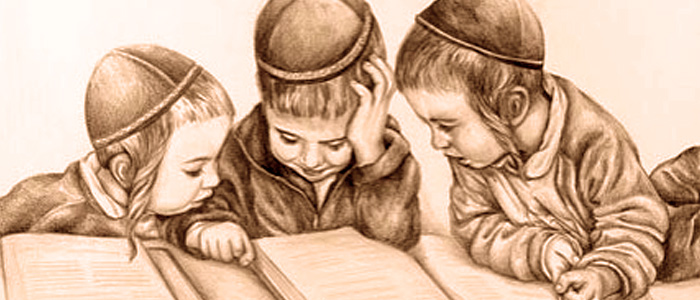
*** The thirteen-year-old students of the Etz Chaim yeshiva were to be examined on their knowledge of the Talmud by the renowned Rabbi Isser Zalman Meltzer. The students approached him one at a time.
One of the students answered a question incorrectly, and Rabbi Meltzer said: “You probably meant this…” The student shook his head and repeated his view, explaining more precisely how he understood the passage. The rabbi tried once more to help him put things right by suggesting another way of reading the passage, but the boy stood his ground. This continued for ten minutes. Suddenly, Rabbi Meltzer excused himself and said that he needed to leave for a little while. He went out and began pacing the corridor, repeating to himself: “The mitzvah to respect one's fellow applies to young children too!” A few minutes later, he returned to the classroom and once again began calmly explaining the same passage to the students.
**** As a child, Max attended a Talmud Torah school. He still knows several tractates by heart, even though he abandoned the traditional Jewish way of life and even married a non-Jewish woman.
How did it all begin? Once, some belongings went missing from one of the students, and for some reason the teacher suspected Max (then still Moishe) of stealing them. He accused him of theft in front of all the students. This was very painful for the boy, but he was certain that his parents would be able to sort everything out and help him. But something unexpected happened. His father took the teacher's suspicions seriously and lashed out at his son.
“How could you disgrace our whole family!” he shouted. “I'll give you a proper beating now, so you won't dare do anything like this again!”
This was a blow to Moishe. He slept badly, lost his appetite, and could not concentrate during lessons. This led to poor grades and, eventually, a complete loss of interest in studying. Worst of all, Moishe stopped respecting himself. Gradually, he got to know other boys who, for one reason or another, also felt like “failures.” Together, they began hanging around, idling, and doing foolish things. They felt rejected, which bred hatred toward those around them in their hearts. Yet despite their newfound “freedom,” they did not feel happy at all.
Moishe transferred to another school (a nonreligious one), but after several pranks he had to be expelled from there too. He changed his name and took off his kippah.
Today Max is an adult and, of course, bears responsibility for his actions. But the blame for many of his misdeeds falls not only on him but also on his teacher, since it was precisely that hurt that led Moishe to sink to where he is today.