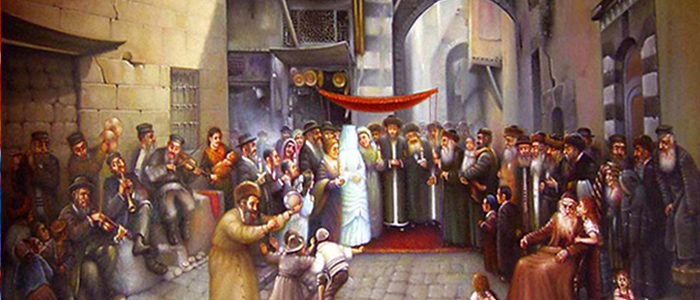
The Bride and Groom
4. It is known that in the days of the Temple, some sages decorated the wedding canopy (chuppah) as well as the groom himself, while others rang little bells before him. But after the destruction of the Temple, the sages prohibited these customs. They also forbade a bride to wear a gold or silver crown during the seven days of celebration (the sages differed in their opinions regarding a fabric crown decorated with gold or silver). The reason for these enactments is mourning and sorrow over the destruction of the Temple and the exile of the Jewish people.
5. It is a great mitzvah to dance, play musical instruments, and rejoice at a wedding in order to bring special joy to the bride and groom. In addition, it is customary to say pleasant things to the groom about his bride and praise her, even if she does not appear beautiful and is not known for her virtue or other qualities.
The Talmud relates that Rabbi Yehuda bar Ilai danced before the bride with a myrtle branch, singing “Kallah na'ah vechasudah” (a bride who is pleasing in appearance and pious). Rav Shmuel, son of Rav Yitzchak, danced before the bride with three myrtle branches, tossing them into the air like a juggler.
These traditions did not remain only in the distant past. It is said that the renowned righteous man Rabbi Yitzchak Blazer always accepted wedding invitations and, choosing a suitable moment, would climb onto the table and dance before the bride and groom and sing songs. He enlivened everyone around him, and the atmosphere filled with joy and merriment. Even at the wedding of his close friend Rabbi Naftali Amsterdam, when he married for the second time at over seventy years of age, he continued to behave in the same way. He was asked why he attached such importance to this, since the couple before him was elderly. Rabbi Blazer replied: “Is there any difference between a young couple and an elderly one when it comes to the mitzvah of bringing joy to the bride and groom?”