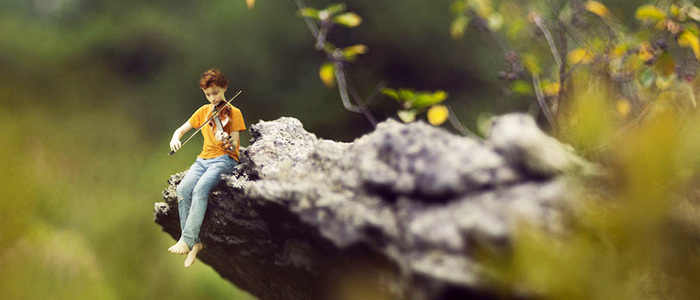
This Shabbat is Shabbat Shirah, the Sabbath of Song. How the Almighty loves it when His sons sing a song to Him! It is written in the Zohar HaKadosh: בראשית —Bereishit—has the same letters as שיר תאב, shir ta'ev, “desires song.” Ever since the Almighty brought His creation into being, He has yearned to hear our song.
There is a well-known teaching of Rabbi Nachman: “Know that every shepherd has his own special melody, connected to the grasses and to the place where he grazes his flock… because every blade of grass has its own song. And by knowing this melody, the shepherd gives the grasses the strength to grow (Likutei Moharan, 63). If only you could merit hearing how the grasses sing the praises of the Almighty! How pleasant it is, while listening to their song, (to prepare oneself) to serve the Almighty! (Sichot HaRan, 163). And when a person prays in a field, all the grasses join his prayer and help him, adding strength to the prayer. That is why prayer is called ‘conversation,’ ‘conversation in the field’ (Bereishit 24:63) (Likutei Ma'amarim 11)”.
This is a wonderful thought. We see that the shepherd has a melody (niggun), while a blade of grass has a song (shirah). What is the difference between them? A niggun is a sad melody. It is all anticipation, a plea for the future, and tears. Shirah—song—is about what is already there.
We think that sorrowful prayers ascend higher. We believe that prayers offered in tears and longing, which of course have their place in life, are more pleasing to the Almighty. And we are certain that this is how we should speak to G-d! But Rabbi Nachman corrects our mistake and says: no, “the song of the grasses forms the shepherd's melody.”
If only our children could see us praying… with joy! Song can have a far greater influence than a sad niggun! If only we came to the Almighty more often to give thanks joyfully, rather than to ask because of what we lack or to grieve over a loss… This helps the young shoots (our children) grow properly. It is important to teach them and ourselves to rejoice even before deliverance comes.
There is a segulah for prosperity that you can put into practice today (but not on Shabbat): feed the birds, scattering wheat grains or breadcrumbs for them. Why? The Shelah HaKadosh says: the L-rd wants us to look at the birds and observe them, because they never know where they will find their next meal, yet they keep singing. They sing with faith, even though they do not know whether they will have enough to eat.
There is no higher level than singing not only after receiving something, but even BEFORE that! The Shelah HaKadosh says: there are only two creatures in the world that sing—a person and a bird. A person sings only when things are going well for him, but a bird sings even before it has received what it wants. Why? “The bird, too, finds a home, and the swallow a nest for herself, where she lays her young” (Tehillim 84:4). It is certain that the Almighty will provide it with food.
There is an expression especially relevant to women. If you want greater prosperity, if you want well-behaved children, then, in the language of Kabbalah, you need to “raise MaN,” mayin nukvin (the feminine principle of the element of water, which, through the power of longing and the desire to receive something good, awakens a desire Above to bestow it). In other words, you need to show that you already have abundance, even if you do not yet have it; to show that the Almighty is bringing you joy right now.
Therefore, another segulah for this Shabbat, on which Tu BiShvat falls, is to set a lavish table with a variety of delicacies—a table filled with the aroma of delicious dishes and the many colors of the fruits for which the Land of Israel is renowned.
“And none shall appear before Me empty-handed” (Shemot 23:15)—I Myself come to their table; I do not want to see their sad faces or hear a niggun—“a sad melody.” Is this the only way you can communicate with Me? With a sad face? Raise MaN (mayin nukvin), and you will see what kind of manna comes down to you from Heaven.
May it be the Almighty's will that, in addition to the sorrowful melody of a niggun in our prayers, we also learn to sing Him a joyful song, like the birds. And may it be His will that the tables of the Jewish people be blessed with abundance.