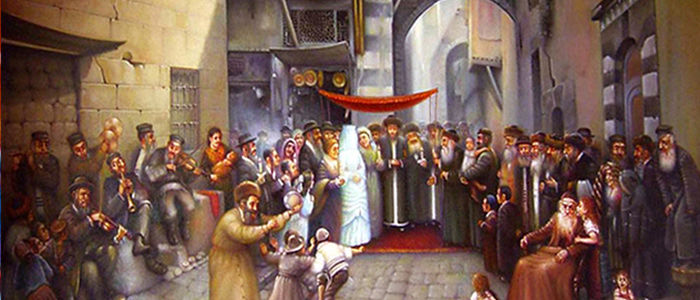
17. The positive commandments instituted by the Sages are: visiting the sick, comforting mourners, accompanying the deceased, helping a bride arrange her wedding, escorting guests, attending to everything necessary for a funeral: carrying the deceased, walking before the deceased, lamenting the deceased, digging a grave and performing the burial; bringing joy to the bride and groom and providing for all their needs. These are mitzvot of gemilut chasadim that a person can perform personally, and no limits have been set for them.
Although the mitzvot mentioned above are enactments of the Sages, they are all included in the mitzvah to love your neighbor as yourself. As the saying goes, whatever you would want others to do for you, do for those close to you.
**** Chaim felt lonely in his new yeshiva. He had no friends, and his loneliness was intertwined with sadness and disappointment. On Shabbat, after the third meal, he decided to leave the yeshiva. After the evening prayers, Moshe, who was considered one of the stronger students, approached Chaim and offered to study with him. This encounter changed the course of events. Having become friends with Moshe, Chaim decided to put off his decision, and in time he himself became one of the yeshiva’s best students.
**** The Chazon Ish was once asked why he devoted so much time to other people, answering their questions and listening to their requests. He replied: “If I had money, I could help people financially. But at present I do not have that ability, so I try to help them in another way.” It is known that even in old age, despite all the entreaties of his close relatives, he repeatedly refused to establish visiting hours. “How can one close the door on people in distress or those who have come from far away?” he would reply.
18. If people accompanying a bride encounter people accompanying the deceased to burial on the same road, the bride is given precedence. If there are not enough people to fulfill both mitzvot, everyone first goes to the wedding and then returns to bury the deceased.
19. If the bride has already been brought under the chuppah, the mitzvah of comforting mourners and arranging the “mourner’s meal” takes precedence over the mitzvah of bringing joy to the bride and groom.
All this applies when it is possible to fulfill both mitzvot one after the other. If it is possible to fulfill only one of these mitzvot, precedence is given to the mitzvah of bringing joy to the bride and groom.
20. The mitzvah of circumcision takes precedence over the mitzvah of burying the dead. But in the case of a met mitzvah (that is, someone who has no one to bury them), the circumcision is postponed until later, because a met mitzvah takes precedence over all other mitzvot.
21. The mitzvah of comforting mourners takes precedence over the mitzvah of visiting the sick. According to one opinion, when there is time to do both on the same day, one should first visit the sick person and try to provide whatever help is needed.