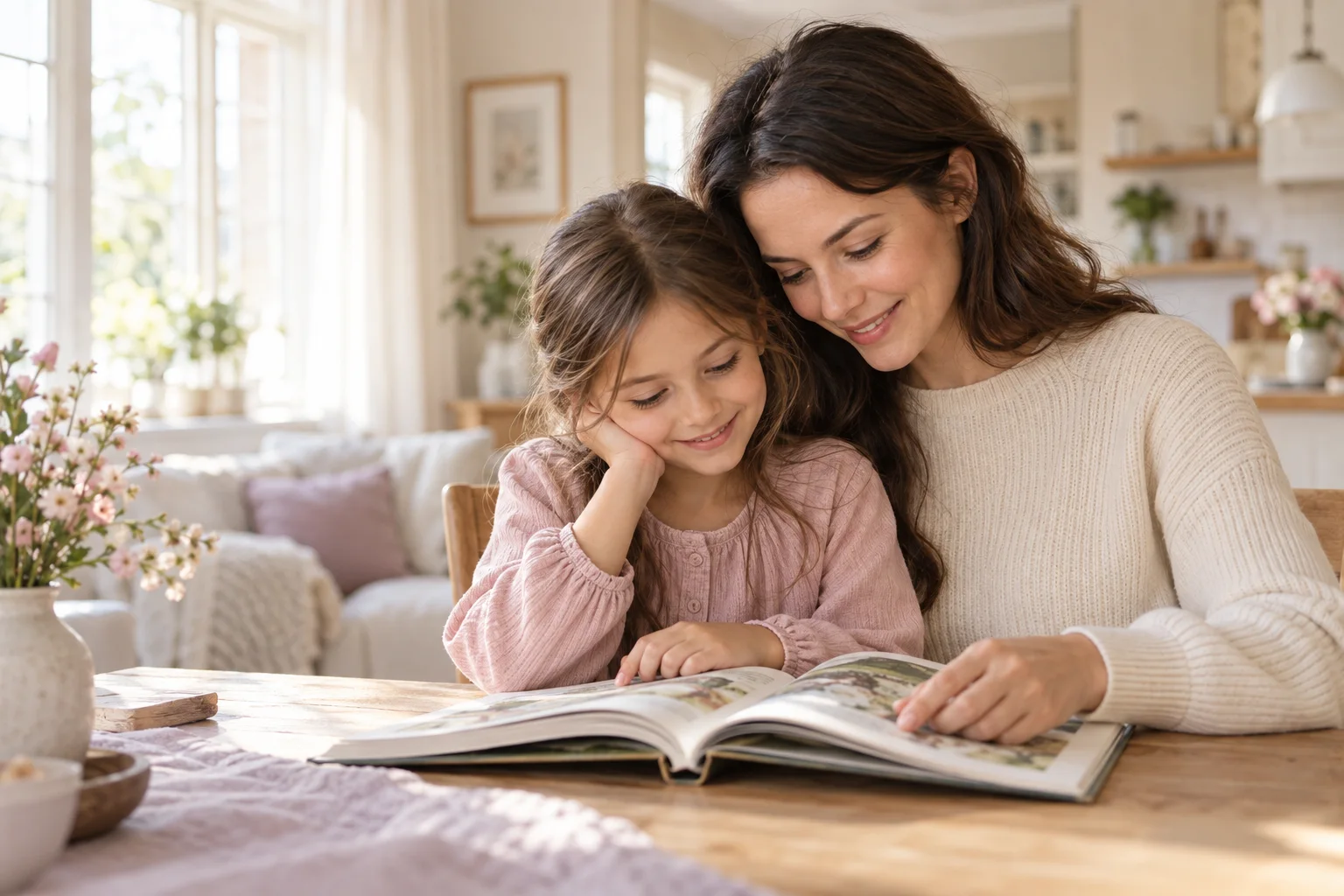
Begin with your family's age group and question
Jewish parenting connects with the way traditions enter an ordinary day: through the family table, a story, a question and attention to one another. A young child and a teenager need different ways of talking. Below is a route through the magazine and a few ideas for reading together. The age groups are a starting point: choose what is interesting and understandable for your particular child.
Young children: seeing and taking part
Before Shabbat, offer your child a small manageable task: arranging napkins or drawing the family table. Explain in your own words what is happening at home and what you are looking forward to together. Adults preparing for the evening can open the Shabbat candle-lighting section. One detail is enough at a time. Later, return to a familiar drawing or word instead of turning the family evening into a long lesson.
School-age children: a holiday and their own question
“Purim with children: a Jewish mother’s tips” has a short introduction to a holiday video. Before Purim, choose one activity together; afterwards, ask what your child remembers. You can first read “Lessons from the Hanukkah menorah for mothers” yourself and choose an idea for a family conversation. Let your child retell an event or story in their own words instead of requiring a ready-made “correct” impression.
Teenagers: one topic at a time
The magazine offers a sequence of articles about raising teenagers. Choose the subject closest to your current question or follow the articles in order:
- 2. Keep in touch with your children
- 3. Protecting trust
- 4. The role of a teenager’s surroundings
- 5. The battle over clothes
- 6. A common parental mistake
- 7. When words are understood differently
After reading, first ask your teenager whether they would like to discuss the subject. Start with one question and leave time for an answer. An article can open a conversation; it does not tell you in advance what a particular person feels.
Russian and Hebrew around one table
For a bilingual family, try a simple game: an adult tells one episode in Russian and the child names a related word in Hebrew. Then swap roles or choose a word together for the next family evening. This is our idea for spending time together, which you can adapt to your languages and habits, rather than a test of knowledge.
A small plan for the week
Choose one text, one question and one unhurried moment to return to it. You do not need to cover every article at once. Remember an answer that interested your child and continue the conversation from there, rather than from a checklist of reading.
Explore other reading routes in Practical guides.